
- Home
- Stephen King
It Page 66
It Read online
Page 66
She realized with sudden shock that she was standing outside of the Kleen-Kloze Washateria, where she and Stan Uris and Ben and Eddie had taken the rags that day in late June--rags stained with blood which only they could see. The windows were now soaped opaque and there was a hand-lettered FOR SALE BY OWNER sign taped to the door. Peering between the swashes of soap, she could see an empty room with lighter squares on the dirty yellow walls where the washers had stood.
I'm going home, she thought dismally, but walked on anyway.
This neighborhood hadn't changed much. A few more of the trees were gone, probably elms felled by disease. The houses looked a little tackier; broken windows seemed slightly more common than they had been when she was a girl. Some of the broken panes had been replaced with cardboard. Some hadn't.
And here she stood in front of the apartment house, 127 Lower Main Street. Still here. The peeling white she remembered had become a peeling chocolate brown at some point during the years between, but it was still unmistakable. There was the window which looked in on what had been their kitchen; there was the window of her bedroom.
(Jim Doyon, you come out of that road! Come out right now, you want to get run over and killed?)
She shivered, hugging her arms across her breasts in an X, cupping her elbows in her palms.
Daddy could still be living here; oh yes he could. He wouldn't move unless he had to. Just walk on up there, Beverly. Look at the mailboxes. Three boxes for three apartments, just like in the old days. And if there's one which says MARSH, you can ring the bell and pretty soon there'll be the shuffle of slippers down the hall and the door will open and you can look at him, the man whose sperm made you red-headed and lefthanded and gave you the ability to draw ... remember how he used to draw? He could draw anything he wanted. If he felt like it, that is. He didn't feel like it often. I guess he had too many things to worry about. But when he did, you used to sit for hours and watch while he drew cats and dogs and horses and cows with MOO coming out of their mouths in balloons. You'd laugh and he'd laugh and then he'd say Now you, Bevvie, and when you held the pen he'd guide your hand and you'd see the cow or the cat or the smiling man unspooling beneath your own fingers while you smelled his Mennen Skin Bracer and the warmth of his skin. Go on up, Beverly. Ring the bell. He'll come and he'll be old, the lines will be drawn deep in his face and his teeth--those that are left-will be yellow, and he'll look at you, and he'll say Why it's Bevvie, Bevvie's come home to see her old dad, come on in Bevvie, I'm so glad to see you, I'm glad because I worry about you Bevvie, I worry a LOT.
She walked slowly up the path, and the weeds growing up between the cracked concrete sections brushed at the legs of her jeans. She looked closely at the first-floor windows, but they were curtained off. She looked at the mailboxes. Third floor, STARKWEATHER. Second floor, BURKE. First floor--her breath caught--MARSH.
But I won't ring. I don't want to see him. I won't ring the bell.
This was a firm decision, at last! The decision that opened the gate to a full and useful lifetime of firm decisions! She walked down the path! Back to downtown! Up to the Derry Town House! Packed! Cabbed! Flew! Told Tom to bug out! Lived successfully! Died happily!
Rang the bell.
She heard the familiar chimes from the living room--chimes that had always sounded to her like a Chinese name: Ching-Chong! Silence. No answer. She shifted on the porch from one foot to the other, suddenly needing to pee.
No one home, she thought, relieved. I can go now.
Instead she rang again: Ching-Chong! No answer. She thought of Ben's lovely little poem and tried to remember exactly when and how he had confessed its authorship, and why, for a brief second, it called up an association with having her first menstrual period. Had she begun menstruating at eleven? Surely not, although her breasts had begun their first achy growth around mid-winter. Why ... ? Then, intervening, a mental picture of thousands of grackles on phone lines and rooftops, all babbling at a white spring sky.
I'll leave now. I've rung twice; that's enough.
But she rang again.
Ching-Chong!
Now she heard someone approaching, and the sound was just as she had imagined: the tired whisper of old slippers. She looked around wildly and came very, very close to just taking to her heels. Could she make it down the cement walk and around the corner, leaving her father to think it had been nothing but kids playing pranks? Hey mister, you got Prince Albert in a can ... ?
She let out a sudden sharp breath and had to tighten her throat because what wanted to come out was a laugh of relief. It wasn't her father at all. Standing in the doorway and looking out at her was a tall woman in her late seventies. Her hair was long and gorgeous, mostly white but shot through with lodes of purest gold. Behind her rimless spectacles were eyes as blue as the water in the fjords her ancestors had perhaps hailed from. She wore a purple dress of watered silk. It was shabby but still dignified. Her wrinkled face was kind.
"Yes, miss?"
"I'm sorry," Beverly said. The urge to laugh had passed as swiftly as it had come. She noticed that the old woman wore a cameo at her throat. It was almost certainly real ivory, surrounded by a band of gold so thin it was nearly invisible. "I must have rung the wrong bell." Or rang the wrong bell on purpose, her mind whispered. "I meant to ring for Marsh."
"Marsh?" Her forehead wrinkled delicately.
"Yes, you see--"
"There's no Marsh here, " the old woman said.
"But--"
"Unless ... you don't mean Alvin Marsh, do you?"
"Yes!" Beverly said. "My father!"
The old woman's hand rose to the cameo and touched it. She peered more closely at Beverly, making her feel ridiculously young, as if she should perhaps have a box of Girl Scout cookies in her hands, or maybe some tags--support the Derry High School Tigers. Then the old woman smiled ... a kind smile that was nonetheless sad.
"Why you have fallen out of touch, miss. I don't want to be the one who tells you this, a stranger, but your father has been dead these last five years."
"But ... on the bell ..." She looked again and uttered a small, bewildered sound that was not quite a laugh. In her agitation, in her subconscious but rock-solid certainty that her old man would still be here, she had read KERSH as MARSH.
"You're Mrs. Kersh?" she asked. She was staggered by this news of her father, but she also felt stupid about the mistake--the lady would think her little more than illiterate.
"Mrs. Kersh," she agreed.
"You ... did you know my dad?"
"Very little did I know him," Mrs. Kersh said. She sounded a little like Yoda in The Empire Strikes Back, and Beverly felt like laughing again. When had her emotions gone whip-sawing so violently back and forth? The truth was she couldn't remember a time ... but she was dismally afraid she would before much longer. "He rented the ground-floor apartment before me. We saw each other, me coming and him going, over a space of a few days. He moved down to Roward Lane. Do you know it?"
"Yes," Beverly said. Roward Lane branched off from Lower Main Street four blocks farther down, where the apartment buildings were smaller and even more desperately shabby.
"I used to see him at the Costello Avenue Market sometimes," Mrs. Kersh said, "and at the Washateria before they closed it. We passed a word from time to time. We--girt, you're pale. I'm sorry. Come in and let me give you tea."
"No, I couldn't," Beverly said weakly, but in fact she actually felt pale, like clouded glass that you could nearly look through. She could use tea, and a chair in which to sit and drink it.
"You could and you will," Mrs. Kersh said warmly. "It's the least I can do for having told you such unpleasant news."
Before she could protest, Beverly found herself being led up the gloomy hall and into her old apartment, which now seemed much smaller but safe enough--safe, she supposed, because almost everything was different. Instead of the pink-topped Formica table with its three chairs, there was a small round table, really not much
bigger than an endtable, with silk flowers in a pottery vase. Instead of the old Kelvinator refrigerator with the round drum on top (her father tinkered with it constantly to keep it going), there was a copper-colored Frigidaire. The stove was small but efficient-looking. There was an Amana RadarRange above it. Bright blue curtains hung in the windows, and she could see flowerboxes outside them. The floor, linoleum when she was a girl here, had been stripped to its original wood. Many applications of oil made it glow mellowly.
Mrs. Kersh looked around from the stove, where she was placing a teapot. "You grew up here?"
"Yes," Beverly said. "But it's very different now ... so trim and tidy ... wonderful!"
"How kind you are," Mrs. Kersh said, and her smile made her younger. It was radiant. "I have a little money, you see. Not much, but with my Social Security I am comfortable. Once I was a girl in Sweden. I came to this country in 1920, a girl of fourteen with no money--which is the best way to learn the value of money, would you agree?"
"Yes," Bev sad.
"At the hospital I worked," Mrs. Kersh said. "Many years--from 1925 I worked there. I rose to the position of head housekeeper. All the keys I had. My husband invested our money quite well. Now I have reached a little harbor. Look around, miss, while the water boils!"
"No, I couldn't--"
"Please ... still I feel guilty. Look, if you like!"
And so she did look. Her parents' bedroom was now Mrs. Kersh's bedroom, and the difference was profound. The room seemed brighter and airier now. A large cedar chest, the initials R.G. inlaid into it, breathed its gentle aroma into the air. A gigantic surprise-quilt lay on the bed. On it she could see women drawing water, boys driving cattle, men building haystacks. A wonderful quilt.
Her room had become a sewing room. A black Singer machine stood on a wrought-iron table under a pair of starkly efficient Tensor lamps. A picture of Jesus hung on one wall, a picture of John F. Kennedy on another. A beautiful breakfront stood below the picture of JFK--it was filled with books instead of china, but seemed none the worse for that.
She went into the bathroom last.
It had been redone in a rose color that was too low and pleasant to seem gaudy. All of the fixtures were new, and yet she approached the basin feeling that the old nightmare had gripped her again; she would peer down into that black and lidless eye, the whispering would begin, and then the blood--
She leaned over the sink, catching a glimpse of her pallid face and dark eyes in the mirror over the basin, and then she stared into that eye, waiting for the voices, the laughter, the groans, the blood.
How long might she have stood there, bent over the sink, waiting for the sights and sounds twenty-seven years gone, she didn't know; it was Mrs. Kersh's voice that bid her return: "Tea, miss!"
She jerked back, the semi-hypnosis broken, and left the bathroom. If there had been dark magic somewhere down in that drain, it was gone now ... or was sleeping.
"Oh, you shouldn't have!"
Mrs. Kersh looked up at her brightly, smiling a little. "O miss, if you knew how seldom company calls these days, you'd not say so. Why, I put on more than this for the man from the Bangor Hydro who comes to read my meter! I'm making him fat!"
Delicate cups and saucers stood on the round kitchen table, a clean bone-white edged with blue. There was a plate of small cakes and cookies. Beside the sweets a pewter teapot chuffed mild steam and pleasant fragrance. Bemused, Bev thought that the only things missing were the tiny sandwiches with the crusts cut off: auntsandwiches, she'd thought them, always one word. Three main types of auntsandwiehes--cream cheese and olive, watercress, and egg salad.
"Sit down," said Mrs. Kersh. "Sit down, miss, and I'll pour out."
"I'm not a miss," Beverly said, and raised her left hand so that her ring would show.
Mrs. Kersh smiled and pushed a hand through the air--pshaw! the gesture said. "I call all the pretty young girls miss," she said. "Just a habit. Don't take offense."
"No," Beverly said, "not at all." But for some reason she felt a feather-touch of unease: there was something in the old woman's smile that had seemed a little ... what? Unpleasant ? False? Knowing? But that was ridiculous, wasn't it?
"I love what you've done to the place."
"Do you?" Mrs. Kersh said, and poured out. The tea looked dark, muddy. Beverly wasn't sure she wanted to drink it ... and suddenly she wasn't sure she wanted to be here at all.
It did say Marsh under the doorbell, her mind whispered suddenly, and she was frightened.
Mrs. Kersh passed her tea.
"Thank you," Beverly said. The look of it might have been muddy; the aroma, however, was wonderful. She tasted. It was fine. Stop jumping at shadows, she told herself. "That cedar chest in particular is a wonderful piece."
"An antique, that one!" Mrs. Kersh said, and laughed. Beverly noticed that the old woman's beauty was flawed on only one score, and that was common enough here in the northlands. Her teeth were very bad--strong-looking, but bad all the same. They were yellow, and the front two had crossed each other. The canines seemed very long, almost like tusks.
They were white ... when she came to the door she smiled and you thought to yourself how white they were.
Suddenly she was not just a little frightened. Suddenly she wanted--needed--to be away from here.
"Very old, oh yes!" Mrs. Kersh exclaimed, and drank her cup of tea off at a single gulp, with a sudden, shocking slurping sound. She smiled at Beverly--grtwted at her--and Beverly saw that the woman's eyes had changed, too. The corneas were now yellow, ancient, threaded with bleary stitches of red. Her hair was thinner; the braid looked malnourished, no longer silver shot with bright yellow but a dull gray.
"Very old," Mrs. Kersh reminisced over her empty cup, looking slyly at Beverly from her yellowed eyes. Her snaggle teeth showed in that repulsive, almost leering grin. "From home with me it came. The RG carved into it? You noticed?"
"Yes." Her voice came from far away, and a part of her brain yammered If she doesn't know you've seen the change perhaps you're still all right, if she doesn't know, doesn't see--
"My father," she said, pronouncing it fadder, and Beverly saw that her dress had also changed. It had become a scabrous, peeling black. The cameo was a skull, its jaw hung in a diseased gape. "His name was Robert Gray, better known as Bob Gray, better known as Pennywise the Dancing Clown. Although that was not his name, either. But he did love his joke, my fadder."
She laughed again. Some of her teeth had turned as black as her dress. The wrinkles in her skin now cut deep. Her milk-rose skin had gone a sickly yellow. Her fingers were claws. She grinned at Beverly. "Have something to eat, dear." Her voice had risen half an octave, but the octave was cracked in this register, and her voice was the sound of a crypt door swinging mindlessly on hinges clogged with black earth.
"No, thank you," Beverly heard her mouth say in a child's high oh-I-must-be-going voice. The words did not seem to originate in her brain; rather they came out of her mouth and then had to travel around to her ears before she was aware of what she had said.
"No?" the witch asked, and grinned. Her claws scrabbled on the plate and she began to cram thin molasses cookies and delicate frosted slices of cake into her mouth with both hands. Her horrid teeth plunged and reared, plunged and reared; her fingernails, long and dirty, dug into the sweets; crumbs tumbled down the bony slab of her chin. Her breath was the smell of long-dead things burst wide open by the gases of their own decay. Her laugh was now a dead cackle. Her hair was thinner. Scaly scalp showed in patches.
"Oh, he loved his joke, my fadder! This is a joke, miss, if you enjoy them: my fadder bore me rather than my mutter. He shat me from his asshole! Hee! Hee! Hee!"
"I ought to go," Beverly heard herself say in that same high wounded voice--the voice of a small girl who has been viciously embarrassed at her first party. There was no strength in her legs. She was dimly aware that it was not tea in her cup but shit, liquid shit, a little party-favor from the sewers
under the city. She had drunk some of that, not much but a sip, oh God, oh God, oh blessed Jesus, please, please--
The woman was shrinking before her eyes, thinning; it was now a crone with an apple-doll's face who sat across from her, giggling in a high, squealing voice and rocking back and forth.
"Oh my fadder and I are one," she said, "just me, just him, and dear, if you are wise you will run, run back to where you came from, run quickly, because to stay will mean worse than your death. No one who dies in Derry really dies. You knew that before; believe it now."
In slow motion Beverly gathered her legs under her. As if from outside she saw herself gaining her feet and backing away from the table and from the witch in an agony of horror and disbelief, disbelief because she realized for the first time that the neat little dining-room table was not dark oak but fudge. Even as she watched, the witch, still giggling, her ancient yellow eyes slanted slyly off into the corner of the room, broke a piece of it off and stuffed it avidly into the black-ringed trap that was her mouth.
The cups, she saw, were white bark that had been carefully looped with blue-dyed frosting. The pictures of Jesus and John Kennedy were creations of nearly transparent spun sugar, and as she looked at them, Jesus stuck out His tongue and Kennedy dropped a stinky wink.
"We're all waiting for you!" the witch screamed, and her fingernails scrabbled over the surface of the fudge table, drawing deep scars in its shining surface. "Oh yes! Oh yes!"
The overhead lights were globes of hard candy. The wainscotting was caramel taffy. She looked down and saw that her shoes were leaving prints on the floorboards, which were not boards at all but slices of chocolate. The smell of candy was cloying.
 The Stand
 The Shining
 It
It The Dead Zone
 The Dark Tower
 The Gunslinger
 Song of Susannah
 Under the Dome
 The Mist
 Revival
 Misery
 Mile 81
 From a Buick 8
 Just After Sunset
 Black House
 Doctor Sleep
 The Drawing of the Three
 Wizard and Glass
 Dolores Claiborne
 Carrie
 The Little Sisters of Eluria
 The Waste Lands
 The Green Mile
 The Girl Who Loved Tom Gordon
 Cujo
Cujo The Outsider_A Novel
 The Tommyknockers
 Cell
Cell Pet Sematary
 The Talisman
 Four Past Midnight
 Different Seasons
 Needful Things
 Nightmares and Dreamscapes
 Christine
 The Running Man
 The Eyes of the Dragon
 11/22/63
 Firestarter
 Insomnia
 Finders Keepers
 Gerald's Game
 The Wind Through the Keyhole
 Hearts in Atlantis
 Danse Macabre
 Thinner
 Duma Key
 The Bachman Books
 Skeleton Crew
 The Outsider-Stephen King
 Full Dark, No Stars
 Salem's Lot
 Bag of Bones
 Desperation
 End of Watch
 Wolves of the Calla
 Mr. Mercedes
 Billy Summers
 Rose Madder
 Later
Later Gunslinger
 The Langoliers
 Joyland
 If It Bleeds
 Apt Pupil (Scribner Edition)
 Flight or Fright
 Everything's Eventual: 14 Dark Tales
 Night Shift
 The Dark Half
 On Writing
 The Institute
 A Death
 The Man in the Black Suit : 4 Dark Tales
 Bullet
 The Dark Tower tdt-7
 Chiral Mad 3
 Big Driver
 Stephen King: The Green Mile
 Dolan's Cadillac nad-1
 Head Down nad-22
 The Doctor's Case
 Luckey Quarter
 Rage (richard bachman)
 Black House js-2
 The Wind Through the Keyhole (Dark Tower)
 Duma Key: A Novel
 Dark Tower V, The
 Cycle of the Werewolf
 AUTOPSY ROOM FOUR
 Dark Tower VII, The (v. 7)
 Gramma
 Suffer the Little Children
 Chinga
 Word Processor of the Gods
 Lisey’sStory
 Dark Tower V (Prologue)
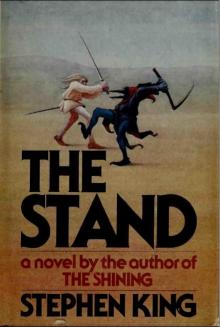 The Stand (Original Edition)
 Rainy Season nad-13
 Transgressions
 The Plant
 Under the Dome: A Novel
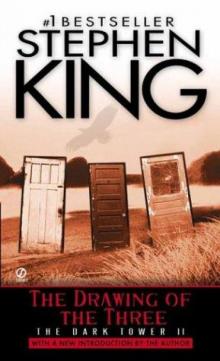 The Dark Tower II: The Drawing of the Three
 The End of the Whole Mess:
 Ur
Ur The Body
 Uncollected Stories 2003
 Chattery Teeth
 The Mouse on the Mile
 The Cat from Hell
![The Drawing of the Three [The Dark Tower II] Read online](http://i1.bookreadfree.com/i/03/25/the_drawing_of_the_three_the_dark_tower_ii_preview.jpg) The Drawing of the Three [The Dark Tower II]
The Drawing of the Three [The Dark Tower II] Cell: A Novel
 Uncle Otto's Truck
 Song of Susannah dt-6
 The Dark Tower VII
 Head Down
 Sneakers
 Crouch End
 Outsider
 End of Watch: A Novel (The Bill Hodges Trilogy Book 3)
 Revival: A Novel
 Everything's Eventual skssc-4
 The Colorado Kid
 Sleeping Beauties: A Novel
 The Dark Tower IV Wizard and Glass
 A Book of Horrors
 Four Past Midnight - 3 - Secret Window, Secret Garden
 The House on Maple Street
 Sometimes They Come Back
 Blockade Billy
 Crouch End nad-17
 Lunch at the Gotham Cafe
 The Waste Lands dt-3
 Six Stories
 A Face in the Crowd
 Case
Case Four Past Midnight - 2 - The Langoliers
 Umney's last case nad-21
 Survivor Type
 Guns (Kindle Single)
 You Know They Got a Hell of a Band
 The Jaunt
 In A Half World Of Terror
 Gwendy's Button Box
 Storm of the Century
 The Jaunt. Travel
 Roadwork
 Darktower 1 - The Gunslinger
 Faithful
 The Regulators
 A Bedroom in the Wee Hours of the Morning
 Graveyard Shift
 The Monkey
 Children of the Corn
 The Reploids
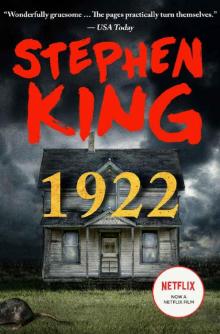 1922
1922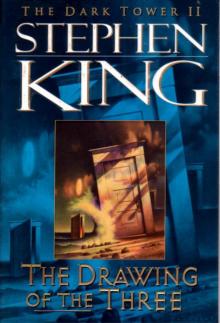 Darktower 2 - The Drawing of the Three
 Wizard and Glass dt-4
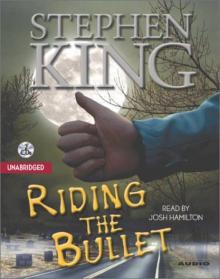 Riding The Bullet
 Wolves of the Calla dt-5
 L.T.'S Theory Of Pets
 The Langoliers fpm-1
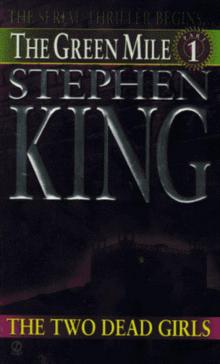 The Two Dead Girls
 The Blue Air Compressor
 Everything's Eventual
 You, Human: An Anthology of Dark Science Fiction
 The Night of The Tiger
 The Regulators (richard bachman)
 Elevation
 The Road Virus Heads North
 Good Marriage
 Four Past Midnight - 5 - The Library Policeman
 Grey Matter
 Herman Wouk Is Still Alive
 In the Tall Grass
 Six Scary Stories
 Foreward
 The Crate
 The wind through the keyhole adt-8
 King, Stephen - Battleground
 The Wedding Gig
 11/22/63: A Novel
 The Long Walk