
- Home
- Stephen King
The Long Walk Page 6
The Long Walk Read online
Page 6
“What do you think about the Prize?” Baker asked.
“I don’t see much sense thinking about it,” Garraty said, and began to urinate. He finished, zipped his fly, and turned around again, mildly pleased that he had accomplished the operation without drawing a warning.
“I think about it,” Baker said dreamily. “Not so much the Prize itself as the money. All that money.”
“Rich men don’t enter the Kingdom of Heaven,” Garraty said. He watched his feet, the only things that were keeping him from finding out if there really was a Kingdom of Heaven or not.
“Hallelujah,” Olson said. “There’ll be refreshments after the meetin’.”
“You a religious fella?” Baker asked Garraty.
“No, not particularly. But I’m no money freak.”
“You might be if you grew up on potato soup and collards,” Baker sid. “Sidemeat only when your daddy could afford the ammunition.”
“Might make a difference,” Garraty agreed, and then paused, wondering whether to say anything else. “But it’s never really the important thing.” He saw Baker looking at him uncomprehendingly and a little scornfully.
“You can’t take it with you, that’s your next line,” McVries said.
Garraty glanced at him. McVries was wearing that irritating, slanted smile again. “It’s true, isn’t it?” he said. “We don’t bring anything into the world and we sure as shit don’t take anything out.”
“Yes, but the period in between those two events is more pleasant in comfort, don’t you think?” McVries said.
“Oh, comfort, shit,” Garraty said. “If one of those goons riding that overgrown Tonka toy over there shot you, no doctor in the world could revive you with a transfusion of twenties or fifties.”
“I ain’t dead,” Baker said softly.
“Yeah, but you could be.” Suddenly it was very important to Garraty that he put this across. “What if you won? What if you spent the next six weeks planning what you were going to do with the cash—never mind the Prize, just the cash—and what if the first time you went out to buy something, you got flattened by a taxicab?”
Harkness had come over and was now walking beside Olson. “Not me, babe,” he said. “First thing I’d do is buy a whole fleet of Checkers. If I win this, I may never walk again.”
“You don’t understand,” Garraty said, more exasperated than ever. “Potato soup or sirloin tips, a mansion or a hovel, once you’re dead that’s it, they put you on a cooling board like Zuck or Ewing and that’s it. You’re better to take it a day at a time, is all I’m saying. If people just took it a day at a time, they’d be a lot happier.”
“Oh, such a golden flood of bullshit,” McVries said.
“Is that so?” Garraty cried. “How much planning are you doing?”
“Well, right now I’ve sort of adjusted my horizons, that’s true—”
“You bet it is,” Garraty said grimly. “The only difference is we’re involved in dying right now.”
Total silence followed that. Harkness took off his glasses and began to polish them. Olson looked a shade paler. Garraty wished he hadn’t said it; he had gone too far.
Then someone in back said quite clearly: “Hear, hear!”
Garraty looked around, sure it was Stebbins even though he had never heard Stebbins’s voice. But Stebbins gave no sign. He was looking down at the road.
“I guess I got carried away,” Garraty muttered, even though he wasn’t the one who had gotten carried away. That had been Zuck. “Anyone want a cookie?”
He handed the cookies around, and it got to be five o’clock. The sun seemed to hang suspended halfway over the horizon. The earth might have stopped turning. The three or four eager beavers who were still ahead of the pack had dropped back until they were less than fifty yards ahead of the main group.
It seemed to Garraty that the road had become a sly combination of upgrades with no corresponding downs. He was thinking that if that were true they’d all end up breathing through oxygen faceplates before long when his foot came down on a discarded belt of food concentrates. Surprised, he looked up. It had been Olson’s. His hands were twitching at his waist. There was a look of frowning surprise on his face.
“I dropped it,” he said. “I wanted something to eat and I dropped it.” He laughed, as if to show what a silly thing that had been. The laugh stopped abruptly. “I’m hungry,” he said.
No one answered. By that time everyone had gone by and there was no chance to pick it up. Garraty looked back and saw Olson’s food belt lying across the broken white passing line.
“I’m hungry,” Olson repeated patiently.
The Major likes to see someone who’s raring to rip, wasn’t that what Olson had said when he came back from getting his number? Olson didn’t look quite so raring to rip anymore. Garraty looked at the pockets of his own belt. He had three tubes of concentrate left, plus the Snappy Crackers and the cheese. The cheese was pretty cruddy, though.
“Here,” he said, and gave Olson the cheese.
Olson didn’t say anything, but he ate the cheese.
“Musketeer,” McVries said, with that same slanted grin.
By five-thirty the air was smoky with twilight. A few early lightning bugs flitted aimlessly through the air. A groundfog had curdled milkily in the ditches and lower gullies of the fields. Up ahead someone asked what happened if it got so foggy you walked off the road by mistake.
Barkovitch’s unmistakable voice came back quickly and nastily: “What do you think, Dumbo?”
Four gone, Garraty thought. Eight and a half hours on the road and only four gone. There was a small, pinched feeling in his stomach. I’ll never outlast all of them, he thought. Not all of them. But on the other hand, why not. Someone had to.
Talk had faded with the daylight. The silence that set in was oppressive. The encroaching dark, the groundmist collecting into small, curdled pools . . . for the first time it seemed perfectly real and totally unnatural, and he wanted either Jan or his mother, some woman, and he wondered what in the hell he was doing and how he ever could have gotten involved. He could not even kid himself that everything had not been up front, because it had been. And he hadn’t even done it alone. There were currently ninety-five other fools in this parade.
The mucus ball was in his throat again, making it hard to swallow. He realized that someone up ahead was sobbing softly. He had not heard the sound begin, and no one had called his attention to it; it was as if it had been there all along.
Ten miles to Caribou now, and at least there would be lights. The thought cheered Garraty a little. It was okay after all, wasn’t it? He was alive, and there was no sense thinking ahead to a time when he might not be. As McVries had said, it was all a matter of adjusting your horizons.
At quarter of six the word came back on a boy named Travin, one of the early leaders who was now falling slowly back through the main group. Travin had diarrhea. Garraty heard it and couldn’t believe it was true, but when he saw Travin he knew that it was. The boy was walking and holding his pants up at the same time. Every time he squatted he picked up a warning, and Garraty wondered sickly why Travin didn’t just let it roll down his legs. Better to be dirty than dead.
Travin was bent over, walking like Stebbins with his sandwich, and every time he shuddered Garraty knew that another stomach cramp was ripping through him. Garraty felt disgusted. There was no fascination in this, no mystery. It was a boy with a bellyache, that was all, and it was impossible to feel anything but disgust and a kind of animal terror. His own stomach rolled queasily.
The soldiers were watching Travin very carefully. Watching and waiting. Finally Travin half-squatted, half-fell, and the soldiers shot him with his pants down. Travin rolled over and grimaced at the sky, ugly and pitiful. Someone retched noisily and was warned. It sounded to Garraty as if he was spewing his belly up whole.
“He’ll go next,” Harkness said in a business-like way.
“Shut up,” Gar
raty choked thickly. “Can’t you just shut up?”
No one replied. Harkness looked ashamed and began to polish his glasses again. The boy who vomited was not shot.
They passed a group of cheering teenagers sitting on a blanket and drinking Cokes. They recognized Garraty and gave him a standing ovation. It made him feel uncomfortable. One of the girls had very large breasts. Her boyfriend was watching them jiggle as she jumped up and down. Garraty decided that he was turning in to a sex maniac.
“Look at them jahoobies,” Pearson said. “Dear, dear me.”
Garraty wondered if she was a virgin, like he was.
They passed by a still, almost perfectly circular pond, faintly misted over. It looked like a gently clouded mirror, and in the mysterious tangle of water plants growing around the edge, a bullfrog croaked hoarsely. Garraty thought the pond was one of the most beautiful things he had ever seen.
“This is one hell of a big state,” Barkovitch said someplace up ahead.
“That guy gives me a royal pain in the ass,” McVries said solemnly. “Right now my one goal in life is to outlast him.”
Olson was saying a Hail Mary.
Garraty looked at him, alarmed.
“How many warnings has he got?” Pearson asked.
“None that I know of,” Baker said.
“Yeah, but he don’t look so good.”
“At this point, none of us do,” McVries said.
Another silence fell. Garraty was aware for the first time that his feet hurt. Not just his legs, which had been troubling him for some time, but his feet. He noticed that he had been unconsciously walking on the outside of the soles, but every now and then he put a foot down flat and winced. He zipped his jacket all the way up and turned the collar against his neck. The air was still damp and raw.
“Hey! Over there!” McVries said cheerfully.
Garraty and the others looked to the left. They were passing a graveyard situated atop a small grassy knoll. A fieldstone wall surrounded it, and now the mist was creeping slowly around the leaning gravestones. An angel with a broken wing stared at them with empty eyes. A nuthatch perched atop a rust flaking flagholder left over from some patriotic holiday and looked them over perkily.
“Our first boneyard,” McVries said. “It’s on your side. Ray, you lose all your points. Remember that game?”
“You talk too goddam much,” Olson said suddenly.
“What’s wrong with graveyards, Henry, old buddy? A fine and private place, as the poet said. A nice watertight casket—”
“Just shut up!”
“Oh, pickles,” McVries said. His scar flashed very white in the dying daylight. “You don’t really mind the thought of dying, do you, Olson? Like the poet also said, it ain’t the dying, it’s laying in the grave so long. Is that what’s bugging you, booby?” McVries began to trumpet. “Well, cheer up, Charlie! There’s a brighter day com—”
“Leave him alone,” Baker said quietly.
“Why should I? He’s busy convincing himself he can crap out any time he feels like it. That if he just lays down and dies, it won’t be as bad as everyone makes out. Well, I’m not going to let him get away with it.”
“If he doesn’t die, you will,” Garraty said.
“Yeah, I’m remembering,” McVries said, and gave Garraty his tight, slanted smile . . . only this time there was absolutely no humor in it at all. Suddenly McVries looked furious, and Garraty was almost afraid of him. “He’s the one that’s forgetting. This turkey here.”
“I don’t want to do it anymore,” Olson said hollowly, “I’m sick of it.”
“Raring to rip,” McVries said, turning on him. “Isn’t that what you said? Fuck it, then. Why don’t you just fall down and die then?”
“Leave him alone,” Garraty said.
“Listen, Ray—”
“No, you listen. One Barkovitch is enough. Let him do it his own way. No musketeers, remember.”
McVries smiled again. “Okay, Garraty. You win.”
Olson didn’t say anything. He just kept picking them up and laying them down.
Full dark had come by six-thirty. Caribou, now only six miles away, could be seen on the horizon as a dim glow. There were few people along the road to see them into town. They seemed to have all gone home to supper. The mist was chilly around Ray Garraty’s feet. It hung over the hills in ghostly limp banners. The stars were coming brighter overhead, Venus glowing steadily, the Dipper in its accustomed place. He had always been good at the constellations. He pointed out Cassiopeia to Pearson, who only grunted.
He thought about Jan, his girl, and felt a twinge of guilt about the girl he had kissed earlier. He couldn’t remember exactly what that girl had looked like anymore, but she had excited him. Putting his hand on her ass like that had excited him—what would have happened if he had tried to put his hand between her legs? He felt a clockspring of pressure in his groin that made him wince a little as he walked.
Jan had long hair, almost to her waist. She was sixteen. Her breasts were not as big as those of the girl who had kissed him. He had played with her breasts a lot. It drove him crazy. She wouldn’t let him make love to her, and he didn’t know how to make her. She wanted to, but she wouldn’t. Garraty knew that some boys could do that, could get a girl to go along, but he didn’t seem to have quite enough personality—or maybe not quite enough will—to convince her. He wondered how many of the others here were virgins. Gribble had called the Major a murderer. He wondered if Gribble was a virgin. He decided Gribble probably was.
They passed the Caribou city limits. There was a large crowd there, and a news truck from one of the networks. A battery of lights bathed the road in a warm white glare. It was like walking into a sudden warm lagoon of sunlight, wading through it, and then emerging again.
A fat newspaperman in a three-piece suit trotted along with them, poking his long-reach microphone at different Walkers. Behind him, two technicians busily unreeled a drum of electric cable.
“How do you feel?”
“Okay. I guess I feel okay.”
“Feeling tired?”
“Yeah, well, you know. Yeah. But I’m still okay.”
“What do you think your chances are now?”
“I dunno . . . okay, I guess. I still feel pretty strong.”
He asked a big bull of a fellow, Scramm, what he thought of the Long Walk. Scramm grinned, said he thought it was the biggest fucking thing he’d ever seen, and the reporter made snipping motions with his fingers at the two technicians. One of them nodded back wearily.
Shortly afterward he ran out of microphone cable and began wending his way back toward the mobile unit, trying to avoid the tangles of unreeled cord. The crowd, drawn as much by the TV crew as by the Long Walkers themselves, cheered enthusiastically. Posters of the Major were raised and lowered rhythmically on sticks so raw and new they were still bleeding sap. When the cameras panned over them, they cheered more frantically than ever and waved to Aunt Betty and Uncle Fred
They rounded a bend and passed a small shop where the owner, a little man wearing stained white, had set up a soft drink cooler with a sign over it which read: ON THE HOUSE FOR THE LONG WALKERS!! COURTESY OF “EV’S” MARKET! A police cruiser was parked close by, and two policemen were patiently explaining to Ev, as they undoubtedly did every year, that it was against the rules for spectators to offer any kind of aid or assistance—including soft drinks—to the Walkers.
They passed by the Caribou Paper Mills, Inc., a huge, soot-blackened building on a dirty river. The workers were lined up against the cyclone fences, cheering good-naturedly and waving. A whistle blew as the last of the Walkers—Stebbins—passed by, and Garraty, looking back over his shoulder, saw them trooping inside again.
“Did he ask you?” a strident voice inquired of Garraty. With a feeling of great weariness, Garraty looked down at Gary Barkovitch.
“Did who ask me what?”
“The reporter, Dumbo. Did he ask you how you felt?�
��
“No, he didn’t get to me.” He wished Barkovitch would go away. He wished the throbbing pain in the soles of his feet would go away.
“They asked me,” Barkovitch said. “You know what I told them?”
“Huh-uh.”
“I told them I felt great,” Barkovitch said aggressively. The rainhat was still flopping in his back pocket. “I told them I felt real strong. I told them I felt prepared to go on forever. And do you know what else I told them?”
“Oh, shut up,” Pearson said.
“Who asked you, long, tall and ugly?” Barkovitch said.
“Go away,” McVries said. “You give me a headache.”
Insulted once more, Barkovitch moved on up the line and grabbed Collie Parker. “Did he ask you what—”
“Get out of here before I pull your fucking nose off and make you eat it,” Collie Parker snarled. Barkovitch moved on quickly. The word on Collie Parker was that he was one mean son of a bitch.
“That guy drives me up the wall,” Pearson said.
“He’d be glad to hear it,” McVries said. “He likes it. He also told that reporter that he planned to dance on a lot of graves. He means it, too. That’s what keeps him going.”
“Next time he comes around I think I’ll trip him,” Olson said. His voice sounded dull and drained.
“Tut-tut,” McVries said. “Rule 8, no interference with your fellow Walkers.”
“You know what you can do with Rule 8,” Olson said with a pallid smile.
“Watch out,” McVries grinned, “you’re starting to sound pretty lively again.”
By 7 PM the pace, which had been lagging very close to the minimum limit, began to pick up a little. It was cool and if you walked faster you kept warmer. They passed beneath a turnpike overpass, and several people cheered them around mouth fuls of Dunkin’ Donuts from the glass-walled shop situated near the base of the exit ramp.
“We join up with the turnpike someplace, don’t we?” Baker asked.
 The Stand
 The Shining
 It
It The Dead Zone
 The Dark Tower
 The Gunslinger
 Song of Susannah
 Under the Dome
 The Mist
 Revival
 Misery
 Mile 81
 From a Buick 8
 Just After Sunset
 Black House
 Doctor Sleep
 The Drawing of the Three
 Wizard and Glass
 Dolores Claiborne
 Carrie
 The Little Sisters of Eluria
 The Waste Lands
 The Green Mile
 The Girl Who Loved Tom Gordon
 Cujo
Cujo The Outsider_A Novel
 The Tommyknockers
 Cell
Cell Pet Sematary
 The Talisman
 Four Past Midnight
 Different Seasons
 Needful Things
 Nightmares and Dreamscapes
 Christine
 The Running Man
 The Eyes of the Dragon
 11/22/63
 Firestarter
 Insomnia
 Finders Keepers
 Gerald's Game
 The Wind Through the Keyhole
 Hearts in Atlantis
 Danse Macabre
 Thinner
 Duma Key
 The Bachman Books
 Skeleton Crew
 The Outsider-Stephen King
 Full Dark, No Stars
 Salem's Lot
 Bag of Bones
 Desperation
 End of Watch
 Wolves of the Calla
 Mr. Mercedes
 Billy Summers
 Rose Madder
 Later
Later Gunslinger
 The Langoliers
 Joyland
 If It Bleeds
 Apt Pupil (Scribner Edition)
 Flight or Fright
 Everything's Eventual: 14 Dark Tales
 Night Shift
 The Dark Half
 On Writing
 The Institute
 A Death
 The Man in the Black Suit : 4 Dark Tales
 Bullet
 The Dark Tower tdt-7
 Chiral Mad 3
 Big Driver
 Stephen King: The Green Mile
 Dolan's Cadillac nad-1
 Head Down nad-22
 The Doctor's Case
 Luckey Quarter
 Rage (richard bachman)
 Black House js-2
 The Wind Through the Keyhole (Dark Tower)
 Duma Key: A Novel
 Dark Tower V, The
 Cycle of the Werewolf
 AUTOPSY ROOM FOUR
 Dark Tower VII, The (v. 7)
 Gramma
 Suffer the Little Children
 Chinga
 Word Processor of the Gods
 Lisey’sStory
 Dark Tower V (Prologue)
 The Stand (Original Edition)
 Rainy Season nad-13
 Transgressions
 The Plant
 Under the Dome: A Novel
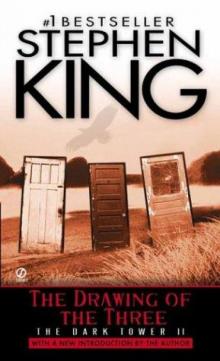 The Dark Tower II: The Drawing of the Three
 The End of the Whole Mess:
 Ur
Ur The Body
 Uncollected Stories 2003
 Chattery Teeth
 The Mouse on the Mile
 The Cat from Hell
![The Drawing of the Three [The Dark Tower II] Read online](http://i1.bookreadfree.com/i/03/25/the_drawing_of_the_three_the_dark_tower_ii_preview.jpg) The Drawing of the Three [The Dark Tower II]
The Drawing of the Three [The Dark Tower II] Cell: A Novel
 Uncle Otto's Truck
 Song of Susannah dt-6
 The Dark Tower VII
 Head Down
 Sneakers
 Crouch End
 Outsider
 End of Watch: A Novel (The Bill Hodges Trilogy Book 3)
 Revival: A Novel
 Everything's Eventual skssc-4
 The Colorado Kid
 Sleeping Beauties: A Novel
 The Dark Tower IV Wizard and Glass
 A Book of Horrors
 Four Past Midnight - 3 - Secret Window, Secret Garden
 The House on Maple Street
 Sometimes They Come Back
 Blockade Billy
 Crouch End nad-17
 Lunch at the Gotham Cafe
 The Waste Lands dt-3
 Six Stories
 A Face in the Crowd
 Case
Case Four Past Midnight - 2 - The Langoliers
 Umney's last case nad-21
 Survivor Type
 Guns (Kindle Single)
 You Know They Got a Hell of a Band
 The Jaunt
 In A Half World Of Terror
 Gwendy's Button Box
 Storm of the Century
 The Jaunt. Travel
 Roadwork
 Darktower 1 - The Gunslinger
 Faithful
 The Regulators
 A Bedroom in the Wee Hours of the Morning
 Graveyard Shift
 The Monkey
 Children of the Corn
 The Reploids
 1922
1922 Darktower 2 - The Drawing of the Three
 Wizard and Glass dt-4
 Riding The Bullet
 Wolves of the Calla dt-5
 L.T.'S Theory Of Pets
 The Langoliers fpm-1
 The Two Dead Girls
 The Blue Air Compressor
 Everything's Eventual
 You, Human: An Anthology of Dark Science Fiction
 The Night of The Tiger
 The Regulators (richard bachman)
 Elevation
 The Road Virus Heads North
 Good Marriage
 Four Past Midnight - 5 - The Library Policeman
 Grey Matter
 Herman Wouk Is Still Alive
 In the Tall Grass
 Six Scary Stories
 Foreward
 The Crate
 The wind through the keyhole adt-8
 King, Stephen - Battleground
 The Wedding Gig
 11/22/63: A Novel
 The Long Walk