
- Home
- Stephen King
Danse Macabre Page 45
Danse Macabre Read online
Page 45
Cordwainer is an archaic English word for "shoemaker"; so the literal meaning of Ellison's pen name for scripts which he feels have been perverted beyond any kind of useful life is "one who makes shoes for birds." It is, I think, as good an explanation as any for the work that television is engaged in, and suggests quite well the nature of its usefulness.
It is not the purpose of this book to talk about people per se, nor is it the purpose of this chapter on horror fiction to fulfill a "personal glimpse of the writer" sort of function; that is the job of the Out of the Pages section in People magazine (which my youngest son, with unknowing critical acuity, insists on calling Pimple). But in the case of Harlan Ellison, the man and his work have become so entwined that it is impossible to pull them completely apart.
The book I want to talk about here is Ellison's collection of short fiction, Strange Wine (1978). But each Ellison collection seems built on the collections which have preceded it--each seems to be Ellison's report to the outside world on the subject This Is Where Harlan Is Now. And so it becomes necessary to discuss this book in a more personal way. He demands it of himself, and while that doesn't specially matter, his work also demands it . . . and that does matter.
Ellison's fiction is and always has been a nervous bundle of contradictions. He's not a novelist, he says, but he has written at least two novels, and one of them, Rockabilly (later retitled Spider Kiss), remains one of the two or three best novels ever to be published about the cannibalistic world of rock and roll music. He says he's not a fantasist, but nearly all of his stories are fantasies. In the course of Strange Wine, for instance, we meet a writer whose work is done for him by gremlins after the writer himself has gone dry; we also meet a nice Jewish boy who is haunted by his mother after she dies ("Mom, why don't you get off my case?" Lance, the nice Jewish boy in question, asks the ghost desperately at one point; "I saw you playing with yourself last night," the shade of Mom returns sadly).
In the introduction to the book's most frightening story, "Croatoan," Ellison says he is pro-choice when it comes to abortion, just as he has said in both his fiction and in his essays over the last twenty years that he is an affirmed liberal and free-thinker,26 but "Croatoan"--and most of Ellison's short stories--are as sternly moralistic as the words of an Old Testament prophet. In many of the out-and-out horror tales there is more than a whiff of those Tales from the Vault/Vault of Horror ghastlies where the climax so often involves the evildoer having his crimes revisited upon himself . . . only raised to the tenth power. But the irony cuts with a keener blade in Ellison's work, and we have less feeling that rough justice has been meted out and the balance restored. In Ellison's stories, we have little sense of winners and losers. Sometimes there are survivors. Sometimes there are no survivors.
"Croatoan" uses that myth of alligators under the streets of New York as its starting point--see also Thomas Pynchon's V. and a funny-horrible novel called Death Tour by David J. Michael; this is an oddly pervasive urban nightmare. But Ellison's story is really about abortion. He may not be antiabortion (nowhere in his intro to this story does he say he's pro-abortion, however), but the story is certainly more sharply honed and unsettling than that tattered piece of yellow journalism which all right-to-lifers apparently keep in their wallets or purses so they can wave it under your nose at the drop of an opinion--this is the one which purports to have been written by a baby while in utero. "I can't wait to see the sun and the flowers," the fetus gushes. "I can't wait to see my mother's face, smiling down at me . . ." It ends, of course, with the fetus saying, "Last night my mother killed me."
"Croatoan" begins with the protagonist flushing the aborted fetus down the toilet. The ladies who have done the deed to the protagonist's girlfriend have packed their d & c tools and left. Carol, the woman who has had the abortion, flips out and demands that the protagonist go and find the fetus. Trying to placate her, he goes out into the street with a crowbar, levers up a manhole cover . . . and descends into a different world.
The alligator story began, of course, as a result of the give-a-kid-a-baby-alligator-aren't-they-just-the-cutest-little-things craze of the midfifties. The kid who got the gator would keep it for a few weeks, then the tiny alligator would all of a sudden not be so tiny anymore. It would nip, perhaps draw blood, and down the toilet it went. It was not so farfetched to believe that they might all be down there on the black underside of our society, feeding, growing bigger, waiting to gobble up the first unwary sewer repairman to come sloshing along in his hipwaders. As David Michael points out in Death Tour, the problem is that most sewers are much too cold to sustain life in fully grown alligators, let alone in those still small enough to flush away. Such a dull fact, however, is hardly enough to kill such a powerful image . . . and I understand that a movie which takes this image as its text is on the way.
Ellison has always been a sociological sort of writer, and we can almost feel him seizing upon the symbolic possibilities of such an idea, and when the protagonist descends deep enough into this purgatorial world, he discovers a mystery of cryptic, Lovecraftian proportions:
At the entrance of their land someone--not the children, they couldn't have done it--long ago built a road sign. It is a rotted log on which has been placed, carved from fine cherrywood, a book and a hand. The book is open, and the hand rests on the book, one finger touching the single word carved in the open pages. The word is CROATOAN.
Further along, the secret is revealed. Like the alligators of the myth, the fetuses have not died. The sin is not so easily gotten rid of. Used to swimming in placental waters, in their own way as primitive and reptilian as alligators themselves, the fetuses have survived the flush and live here in the dark, symbolically existing in the filth and the shit dropped down on them from the society of our overworld. They are the embodiment of such Old Testament maxims as "Sin never dies" and "Be sure your sin will find you out."
Down here in this land beneath the city live the children. They live easily and in strange ways. I am only now coming to know the incredible manner of their existence. How they eat, what they eat, bow they manage to survive, and have managed for hundreds of years, these are all things I learn day by day, with wonder surmounting wonder.
I am the only adult here.
They have been waiting for me.
They call me father.
At its simplest, "Croatoan" is a tale of the Just Revenge. The protagonist is a rotter who has casually impregnated a number of women; the abortion on Carol is not the first one his friends Denise and Joanna have performed for this irresponsible Don Juan (although they swear it will be the last). The Just Revenge is that he finds his dodged responsibilities have been waiting for him all along, as implacable as the rotting corpse which to often returned from the dead to hunt down its killer in the archetypical Haunt of Fear story (the Graham Ingles classic "Horror We? How's Bayou?" for instance).
But Ellison's prose style is arresting, his grasp of this myth-image of the lost alligators seems solid and complete, and his evocation of this unsuspected underworld is marvelous. Most of all, we sense outrage and anger--as with the best Ellison stories, we sense personal involvement, and have a feeling that Ellison is not so much telling the tale as he is jabbing it viciously out of its hiding place. It is the feeling that we are walking over a lot of jagged glass in thin shoes, or running across a minefield in the company of a lunatic. Accompanying these feelings is the feeling that Ellison is preaching to us . . . not in any lackluster, ho-hum way, but in a large, bellowing voice that may make us think of Jonathan Edwards's "Sinners in the Hands of an Angry God." His best stories seem strong enough to contain morals as well as themes, and the most surprising and gratifying thing about his short fiction is that he gets away with the moralizing; we find he rarely sells his birthright for a plot of message. It should not be so, but in his fury, Ellison manages to carry everything, not at a stagger but at a sprint.
In "Hitler Painted Roses," we have Margaret Thrushwood, whose sufferings make
Job's look like a bad case of athlete's foot. In this fantasy, Ellison supposes--much as Stanley Elkin does in The Living End--that the reality we experience in the afterlife depends on politics: namely, on what people back here think of us. Further, it posits a universe where God (a multiple God here, referred to as They) is an image-conscious poseur with no real interest in right or wrong.
Margaret's lover, a Mr. Milquetoast veterinarian named Doc Thomas, murders the entire Ramsdell family in 1935 when he discovers that the hypocritical Ramsdell ("I'll have no whores in my house," Ramsdell says when he catches Margaret in the kip with Doc) has been helping himself to a bit of Margaret every now and then; Ramsdell's definition of "whore" apparently begins when Margaret's sex partner stops being him.
Only Margaret survives Doc's berserk rage, and when she is discovered alive by the townspeople, she is immediately assumed guilty, carried to the Ramsdell well naked, and pitched in. Margaret is sent to hell for the crime she is presumed to have committed, while Doc Thomas, who dies peacefully in bed twenty-six years later, goes to heaven. Ellison's vision of heaven also resembles Stanley Elkin's in The Living End. "Paradise," Elkin tells us, resembles "a small theme-park." Ellison sees it as a place where moderate beauty balances off--but just barely--moderate tackiness. There are other similarities; in both cases good--nay, saintly!--people are sent to hell because of what amounts to a clerical error, and in this desperate view of the modern condition, even the gods are existential. The only horror we are spared is a vision of the Almighty in Adidas sneakers with a Head tennis racket over His shoulder and a golden coke-spoon around His neck. All of this comes next year, no doubt.
Before we leave the comparison entirely, let me point out that while Elkin's novel was heavily and for the most part favorably reviewed, Ellison's story, originally published in Penthouse (a magazine not regularly purchased by seekers after literary excellence), is almost unknown. Strange Wine itself is almost unknown, in fact. Most critics ignore fantasy fiction because they don't know what to do with it unless it is out-and-out allegory. "I do not choose to review fantasy," a sometime-critic for no less an organ than the New York Times Book Review once told me. "I have no interest in the hallucinations of the mad." It's always good to be in contact with such an open mind. It broadens one.
Margaret Thrushwood escapes hell through a fluke, and in his heroically overblown description of the auguries which foreshadow this supernatural belch, Ellison has an amusing whack at rewriting Act I of Shakespeare's Julius Caesar. Humor and horror are the original Chang and Eng of literature, and Ellison knows it. We laugh . . . but there is still that undercurrent of unease.
As the smoldering sun passed the celestial equator going north to south, numberless portents revealed themselves: a two-headed calf was born in Dorset near the little town of Blandford; wrecked ships rose from the depths of the Marianas Trench; everywhere, children's eyes grew old and very wise; over the Indian state of Maharashtra clouds assumed the shapes of warring armies; leprous moss quickly grew on the south side of Celtic megaliths and then died away in minutes; in Greece the pretty little gilly-flowers began to bleed and the earth around their clusters gave off a putrescent smell; all sixteen of the ominous dirae designated by Julius Caesar in the first century B.C., including the spilling of salt and wine, stumbling, sneezing, and the creaking of chairs, made themselves apparent; the aurora australis appeared to the Maori; a horned horse was seen by Basques as it ran through the streets of Vizcaya. Numberless other auguries.
And the doorway to Hell opened.
The best thing about the passage quoted above is that we can feel Ellison taking off, pleased with the effect and balance of the language and the particulars described, pushing it, having fun with it. Among those who escape hell during the brief period that the door stands open are Jack the Ripper, Caligula, Charlotte Corday, Edward Teach ("beard still bristling but with the ribbons therein charred and colorless . . . laughing hideously"), Burke and Hare, and George Armstrong Custer.
All are sucked back except for Ellison's Lizzie Borden lookalike, Margaret Thrushwood. She makes her way to heaven, confronts Doc . . . and is sent back by God when her realization of the hypocrisy at work causes heaven to begin cracking and peeling around the edges. The pool of water Doc is soaking his feet in when Margaret drags her blackened, blistered body over to him begins to fill up with lava.
Margaret returns to hell, realizing that she can take it, while poor Doc, who she still manages somehow to love, could not. "There are some people who just shouldn't be allowed to fool around with love," she tells God in the story's best line. Hitler, meanwhile, is still painting his roses just inside the portal to hell (he has been too absorbed to even think about escape when the door opened). God takes one look, Ellison tells us, and "could not wait to get back to find Michelangelo, to tell him about the grandeur They had beheld, there in that most unlikely of places."
The grandeur Ellison wants us to see, of course, is not Hitler's roses but Margaret's ability to love and to go on believing (if only in herself) in a world where the innocent are punished and the guilty rewarded. As in most of Ellison's fiction, the horror revolves around some smelly injustice; its antidote lies most frequently in the human ability of his protagonists to surmount the unfair situation, or, lacking that, at least to reach a modus vivendi with it.
Most of these stories are fables--an uneasy word in a period of literature when the concept of literature is seen to be a simplistic one--and Ellison uses the word frankly in several of his introductions to individual stories. In a letter to me, dated December 28, 1979, he discusses the use of the fable in fantasy fiction that has been deliberately laid against the backdrop of the modern world:
"Strange Wine continues--as I see it in retrospect--my perception that reality and fantasy have exchanged positions in contemporary society. If there is a unified theme in the stories, it is that. Continued from the work I have done in the previous two books. Approaching Oblivion (1974) and Deathbird Stories (1975), it tries to provide a kind of superimposed precontinuum by the use and understanding of which the reader who leads even a lightly examined existence can grasp hold of his/her life and transcend his/her fate by understanding it.
"That's all pretty high-flown stuff; but what I mean, simply put, is that the workaday events that command our attention are so big, so fantastic, so improbable that no one who isn't walking the parapet of madness can cope with what's coming down.27
"The Teheran hostages, the Patty Hearst kidnapping, the Howard Hughes fake biography and subsequent death, the Entebbe raid, the murder of Kitty Genovese, the Jonestown massacre, the H-bomb alert in Los Angeles several years ago, Watergate, the Hillside Strangler, the Manson Family, the oil conspiracy: all of them are melodramatic and excessive beyond the ability of a writer of mimetic fiction to capture in fiction without being ridiculous. Yet all of them happened. If you or I were to attempt writing a novel about such things, before the fact, we'd be laughed out of the critical esteem of even the lowliest reviewer.
"I'm not paraphrasing the old saw that truth is stranger than fiction, because I don't see any of these events as mirroring 'truth' or 'reality.' Twenty years ago the very idea of international terrorism would have been inconceivable. Today it's a given. So commonplace that we're unmanned and helpless in the face of Khomeini's audacity. In one fell swoop the man has become the most important public figure of our time. In short, he has manipulated reality simply by being bold. How precise a paradigm he has become for the copelessness of our times. In this madman we have an example of one who understands--even if subcutaneously--that the real world is infinitely manipulable. He has dreamed, and forced the rest of the world to live in that dream. That it is a nightmare for the rest of us is of no concern to the dreamer. One man's Utopia . . .
"But his example, I suppose, in cathexian terms, is endlessly replicable. And what he has done is what I try to do in my stories. To alter everyday existence in a stretch of fiction. . . . And by the altering, by an i
nsertion of a paradigmatic fantasy element, to permit the reader to perceive what she/he takes for granted in the surrounding precept in a slightly altered way. My hope is that the frisson, the tiny shock of new awareness, the little spark of seeing the accepted from an uncomfortable angle, will convince them that there is room enough and time enough, if one only has courage enough, to alter one's existence.
"My message is always the same: we are the finest, most ingenious, potentially the most godlike construct the Universe has ever created. And every man or woman has the ability within him or her to reorder the perceived universe to his or her own design. My stories all speak of courage and ethic and friendship and toughness. Sometimes they do it with love, sometimes with violence, sometimes with pain or sorrow or joy. But they all present the same message: the more you know, the more you can do. Or as Pasteur put it, 'Chance favors the prepared mind.'
"I am antientropy. My work is foursquare for chaos. I spend my life personally, and my work professionally, keeping the soup boiling. Gadfly is what they call you when you are no longer dangerous; I much prefer troublemaker, malcontent, desperado. I see myself as a combination of Zorro and Jiminy Cricket. My stories go out from here and raise hell. From time to time some denigrator or critic with umbrage will say of my work, 'He only wrote that to shock.'
"I smile and nod. Precisely."
So we find that Ellison's effort to "see" the world through a glass of fantasy is not really much different from Kurt Vonnegut's efforts to "see" it through a glass of satire, semi-science-fiction, and a kind of existential vapidity ("Hi-ho . . . so it goes . . . how about that"); or Heller's efforts to "see" it as an endless tragicomedy played out in an open-air madhouse; or Pynchon's effort to "see" it as the longest-running Absurdist play in creation (the epigram heading the second section of Gravity's Rainbow is from The Wizard of Oz--"I don't think we're in Kansas anymore, Toto . . ."; and I think that Harlan Ellison would agree that this sums up postwar life in America as well as anything else). The essential similarity of these writers is that they are all writing fables. In spite of varying styles and points of view, the point in all cases is that these are moral tales.
 The Stand
 The Shining
 It
It The Dead Zone
 The Dark Tower
 The Gunslinger
 Song of Susannah
 Under the Dome
 The Mist
 Revival
 Misery
 Mile 81
 From a Buick 8
 Just After Sunset
 Black House
 Doctor Sleep
 The Drawing of the Three
 Wizard and Glass
 Dolores Claiborne
 Carrie
 The Little Sisters of Eluria
 The Waste Lands
 The Green Mile
 The Girl Who Loved Tom Gordon
 Cujo
Cujo The Outsider_A Novel
 The Tommyknockers
 Cell
Cell Pet Sematary
 The Talisman
 Four Past Midnight
 Different Seasons
 Needful Things
 Nightmares and Dreamscapes
 Christine
 The Running Man
 The Eyes of the Dragon
 11/22/63
 Firestarter
 Insomnia
 Finders Keepers
 Gerald's Game
 The Wind Through the Keyhole
 Hearts in Atlantis
 Danse Macabre
 Thinner
 Duma Key
 The Bachman Books
 Skeleton Crew
 The Outsider-Stephen King
 Full Dark, No Stars
 Salem's Lot
 Bag of Bones
 Desperation
 End of Watch
 Wolves of the Calla
 Mr. Mercedes
 Billy Summers
 Rose Madder
 Later
Later Gunslinger
 The Langoliers
 Joyland
 If It Bleeds
 Apt Pupil (Scribner Edition)
 Flight or Fright
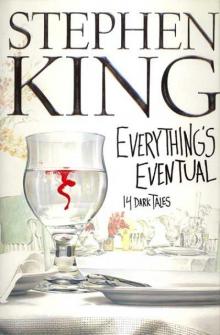
 Everything's Eventual: 14 Dark Tales
 Night Shift
 The Dark Half
 On Writing
 The Institute
 A Death
 The Man in the Black Suit : 4 Dark Tales
 Bullet
 The Dark Tower tdt-7
 Chiral Mad 3
 Big Driver
 Stephen King: The Green Mile
 Dolan's Cadillac nad-1
 Head Down nad-22
 The Doctor's Case
 Luckey Quarter
 Rage (richard bachman)
 Black House js-2
 The Wind Through the Keyhole (Dark Tower)
 Duma Key: A Novel
 Dark Tower V, The
 Cycle of the Werewolf
 AUTOPSY ROOM FOUR
 Dark Tower VII, The (v. 7)
 Gramma
 Suffer the Little Children
 Chinga
 Word Processor of the Gods
 Lisey’sStory
 Dark Tower V (Prologue)
 The Stand (Original Edition)
 Rainy Season nad-13
 Transgressions
 The Plant
 Under the Dome: A Novel
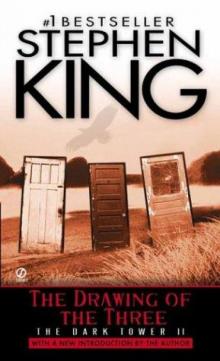 The Dark Tower II: The Drawing of the Three
 The End of the Whole Mess:
 Ur
Ur The Body
 Uncollected Stories 2003
 Chattery Teeth
 The Mouse on the Mile
 The Cat from Hell
![The Drawing of the Three [The Dark Tower II] Read online](http://i1.bookreadfree.com/i/03/25/the_drawing_of_the_three_the_dark_tower_ii_preview.jpg) The Drawing of the Three [The Dark Tower II]
The Drawing of the Three [The Dark Tower II] Cell: A Novel
 Uncle Otto's Truck
 Song of Susannah dt-6
 The Dark Tower VII
 Head Down
 Sneakers
 Crouch End
 Outsider
 End of Watch: A Novel (The Bill Hodges Trilogy Book 3)
 Revival: A Novel
 Everything's Eventual skssc-4
 The Colorado Kid
 Sleeping Beauties: A Novel
 The Dark Tower IV Wizard and Glass
 A Book of Horrors
 Four Past Midnight - 3 - Secret Window, Secret Garden
 The House on Maple Street
 Sometimes They Come Back
 Blockade Billy
 Crouch End nad-17
 Lunch at the Gotham Cafe
 The Waste Lands dt-3
 Six Stories
 A Face in the Crowd
 Case
Case Four Past Midnight - 2 - The Langoliers
 Umney's last case nad-21
 Survivor Type
 Guns (Kindle Single)
 You Know They Got a Hell of a Band
 The Jaunt
 In A Half World Of Terror
 Gwendy's Button Box
 Storm of the Century
 The Jaunt. Travel
 Roadwork
 Darktower 1 - The Gunslinger
 Faithful
 The Regulators
 A Bedroom in the Wee Hours of the Morning
 Graveyard Shift
 The Monkey
 Children of the Corn
 The Reploids
 1922
1922 Darktower 2 - The Drawing of the Three
 Wizard and Glass dt-4
 Riding The Bullet
 Wolves of the Calla dt-5
 L.T.'S Theory Of Pets
 The Langoliers fpm-1
 The Two Dead Girls
 The Blue Air Compressor
 Everything's Eventual
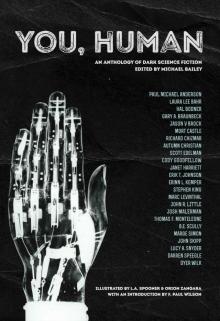 You, Human: An Anthology of Dark Science Fiction
 The Night of The Tiger
 The Regulators (richard bachman)
 Elevation
 The Road Virus Heads North
 Good Marriage
 Four Past Midnight - 5 - The Library Policeman
 Grey Matter
 Herman Wouk Is Still Alive
 In the Tall Grass
 Six Scary Stories
 Foreward
 The Crate
 The wind through the keyhole adt-8
 King, Stephen - Battleground
 The Wedding Gig
 11/22/63: A Novel
 The Long Walk