
- Home
- Stephen King
Danse Macabre Page 40
Danse Macabre Read online
Page 40
Of how his own life influenced the writing of Something Wicked This Way Comes, Bradbury says: "[Something Wicked This Way Comes] sums up my entire life of loving Lon Chaney and the magicians and grotesques he played in the twenties films. My mom took me to see Hunchback in 1923 when I was three. It marked me forever. Phantom [of the Opera] when I was six. Same thing. West of Zanzibar when I was about eight. Magician turns himself into a skeleton in front of black natives! Incredible! The Unholy Three ditto! Chaney took over my life. I was a raving film maniac long before I hit my eighth year. I became a full-time magician after seeing Blackstone on stage in Waukegan, my home town in upper Illinois, when I was nine. When I was twelve, MR. ELECTRICO and his traveling Electric Chair arrived with the Dill Brothers Sideshows and Carnival. That was his 'real' name. I got to know him. Sat by the lakeshore and talked grand philosophies . . . he his small ones, me my grandiose supersized ones about futures and magic. We corresponded several times. He lived in Cairo, Illinois, and was, he said, a defrocked Presbyterian minister. I wish I could remember his Christian name. But his letters have long since been lost in the years, though small magic tricks he gave me I still have. Anyway, magic and magicians and Chaney and libraries have filled my life. Libraries are the real birthing places of the universe for me. I lived in my home-town library move than I did at home. I loved it at night, prowling the slacks on my fat panther feet. All of that went into Something Wicked, which began as a short story in Weird Tales called "Black Ferris" in May, 1948, and just grew like Topsy . . ."
Bradbury has continued to publish fantasy throughout his career, and although the Christian Science Monitor called Something Wicked This Way Comes a "nightmarish allegory," Bradbury really settles for allegory only in his science fiction. In his fantasy, his preoccupation has been with theme, character, symbol . . . and that fantastic rush that comes to the writer of fantasy when he puts the pedal to the metal, yanks back on the steering wheel, and drives his jalopy straight up into the black night of unreality.
Bradbury relates it this way: "['Black Ferris' became] a screenplay in 1958 the night I saw Gene Kelly's Invitation to the Dance and so much wanted to work for and with him [that] I rushed home, finished up an outline of Dark Carnival (its then title) and ran it over to his house. Kelly flipped, said he would direct it, went off to Europe to find money, never found any, came back discouraged, gave me back my screen treatment, some eighty pages or more, and told me Good Luck. I said to hell with it and sat down and spent two years, off and on, finishing Something Wicked. Along the way, I said all and everything, just about, that I would ever want to say about my younger self and how I felt about that terrifying thing: Life, and that other terror. Death, and the exhilaration of both.
"But, above all, I did a loving thing without knowing it. I wrote a paean to my father. I didn't realize it until one night in 1965, a few years after the novel had been published. Sleepless, I got up and prowled my library, found the novel, reread certain portions, burst into tears. My father was locked into the novel, forever, as the father in the book! I wish he had lived to read himself there and be proud of his bravery in behalf of his loving son.
"Even writing this, I am touched again to remember with what a burst of joy and agony I found that my Dad was there, forever, forever for me anyway, locked on paper, kept in print, and beautiful to behold.
"I don't know what else to say. I loved every minute of writing it. I took six months off between drafts. I never tire myself. I just let my subconscious throw up when it feels like it.
"I love the book best of all the things I have ever written. I will love it, and the people in it, Dad and Mr. Electrico, and Will and Jim, the two halves of myself sorely tired and tempted, until the end of my days."
Maybe the first thing we notice in Something Wicked This Way Comes is Bradbury's splitting of those two halves of himself. Will Halloway, the "good" boy (well, both of them are good, but Will's friend Jim goes astray for awhile), is born on October 30, a minute before midnight. Jim Nightshade is born two minutes later . . . a minute past midnight on Halloween morning. Will is Apollonian, a creature of reason and plan, a believer (mostly) in the status quo and the norm. Jim Nightshade, as his name implies, is the Dionysian half, a creature of emotion, something of a nihilist, hellbent for destruction, ready to spit in the devil's face just to see if the spittle will steam and sizzle running down the Dark Lord's cheek. When the lightning rod salesman comes to town at the beginning of Bradbury's fabulous tale ("running just ahead of the storm") and tells the boys that lightning will strike Jim's house, Will has to persuade Jim to put the lightning rod up. Jim's initial reaction is "Why spoil the fun?"
The symbolism of the times of birth is large, crude, and apparent; so is the symbolism of the lightning rod salesman, who arrives as a harbinger of bad times. Bradbury pulls it off nonetheless, mostly out of sheer fearlessness. He deals his archetypes large, like those bridge-sized cards.
In Bradbury's story an ancient carnival, marvelously named Cooger and Dark's Pandemonium Shadow Show, arrives in Green Town, bringing misery and horror under the guise of pleasure and wonder. Will Halloway and Jim Nightshade--and later, Will's father, Charles, as well--wise up to exactly what this particular carnival is all about. The tale eventually narrows down to the struggle for a single soul, that of Jim Nightshade. To call it an allegory would be wrong, but to call it a moral horror tale--much in the manner of those E.C. horror tales which foreran it--would be exactly right. In effect, what happens to Jim and Will is not so much different from Pinocchio's scary encounter on Pleasure Island, where boys who indulge their baser desires (smoking cigars and shooting snooker, for instance) are turned into donkeys. Bradbury in writing here of carnal enticements--not just sexual carnality, but carnality in its broadest forms and manifestations--the pleasures of the flesh run as wild as the tattooed illustrations which cover Mr. Dark's body.14
What saves Bradbury's novel from being merely a "nightmarish allegory" or a simplistic fairy story is its grasp of story and style. Bradbury's style, so attractive to me as an adolescent, now seems a bit oversweet. But it still wields a considerable power. Here is one of the passages which seems oversweet to me--
And Will? Why, he's the last peach, high on a summer tree. Some boys walk by and you cry, seeing them. They feel good, they look good, they are good. Oh, they're not above peeing off a bridge, or stealing an occasional dime-store pencil-sharpener; it's not that. It's just, you know, seeing them pass, that's how they'll be all their life; they'll get hit, hurt, cut, bruised, and always wonder why, why does it happen?
--and one that seems just right:
The wails of a lifetime were garnered in [that train-whistle] from other nights in other slumbering years; the howls of moon-dreamed dogs, the sleep of river-cold winds through January porch screens which stopped the blood, a thousand fire-sirens weeping, or worse! the outgone shreds of breath, the protests of a billion people dead or dying, not wanting to be dead, their groans, their sighing, burst over the earth!
Man, that's a train whistle! I want to tell you!
More clearly than any other book discussed here, Something Wicked This Way Comes reflects the differences between the Apollonian life and the Dionysian. Bradbury's carnival, which creeps inside the town limits and sets up shop in a meadow at three o'clock in the morning (Fitzgerald's dark night of the soul, if you like), is a symbol of everything that is abnormal, mutated, monstrous . . . Dionysian. I've always wondered if the appeal of the vampire myth for children doesn't lie partly in the simple fact that vampires get to sleep all day and stay up all night (vampires never have to miss Creature Features at midnight because of school the next day). Similarly, we know that part of this carnival's attraction for Jim and Will (sure, Will feels its pull too, although not as strongly as his friend Jim feels it; even Will's father is not entirely immune from its deadly siren song) is that there will be no set bedtimes, no rules and regulations, no dull and boring small town day after day, no "eat your broccoli,
think of the people starving in China," no school. The carnival is chaos, it is the taboo land made magically portable, traveling from place to place and even from time to time with its freight of freaks and its glamorous attractions.
The boys (sure, Jim too) represent just the opposite. They are normal, not mutated, not monstrous. They live their lives by the rules of the sunlit world, Will willingly, Jim impatiently. Which is exactly why the carnival wants them. The essence of evil, Bradbury suggests, is its need to compromise and corrupt that delicate passage from innocence to experience that all children must make. In the rigid moral world of Bradbury's fiction, the freaks who populate the carnival have taken on the outward shapes of their inward vices. Mr. Cooger, who has lived for thousands of years, pays for his life of dark degeneracy by becoming a Thing even more ancient, ancient almost beyond our ability to comprehend, kept alive by a steady flow of electricity. The Human Skeleton is paying for miserliness of feeling; the fat lady for physical or emotional gluttony; the dust witch for her gossipy meddling in the lives of others. The carnival has done to them what the undertaker in that old Bradbury horror story did to his victims after they had died.
On its Apollonian side, the book asks us to recall and reexamine the facts and myths of our own childhoods, most specifically our small-town American childhoods. Written in a semipoetic style that seems to suit such concerns perfectly, Bradbury examines these childhood concerns and comes to the conclusion that only children are equipped to deal with childhood's myths and terrors and exhalations. In his midfifties story "The Playground," a man who returns magically to childhood is propelled into a world of lunatic horror which is only, after all, the corner playground with its sandboxes and its slippery slide.
In Something Wicked This Way Comes, Bradbury interconnects this small-town American boyhood motif with most of the ideas of the new American gothic which we have already discussed to some extent. Will and Jim are essentially okay, essentially Apollonian, riding easy in their childhoods and used to looking at the world from their shorter height. But when their teacher, Miss Foley, returns to childhood--the first of the carnival's Green town victims--she enters a world of monotonous, unending horror which is not much different from that experienced by the protagonist of "The Playground." The boys discover Miss Foley--or what remains of her--under a tree.
. . . and there was the little girl, crouched, face buried in her hands, weeping as if the town were gone and the people in it and herself lost in a terrible woods.
And at last Jim came edging up and stood at the edge of the shadow and said, "Who is it?"
"I don't know." But Will felt tears start to his eyes, as if some part of him guessed.
"It's not Jenny Holdridge, is it?"
"No."
"Jane Franklin?"
"No." His mouth felt full of novocaine, his tongue merely stirred in his numb lips. ". . . no . . ."
The little girl wept feeling them near, but not looking up yet.
". . . me . . . help me . . . nobody'll help me . . . me . . . me . . . I don't like this . . . somebody must help me . . . someone must help her . . ." she mourned as for one dead, ". . . someone must help her . . . nobody will . . . nobody has . . . terrible . . . terrible . . ."
The carnival "attraction" which has accomplished this malign trick is one that both Narcissus and Eleanor Vance could relate to: Miss Foley has been trapped in the carnival's mirror maze, imprisoned by her own reflection. Forty or fifty years have been jerked out from under her and she has been tumbled back into her own childhood . . . just what she thought she wanted. She had not considered the possibility of the nameless little girl weeping under the tree.
Jim and Will avoid this fate--barely--and even manage to rescue Miss Foley on her first foray into the mirror maze. One supposes it is not the maze itself but the carousel that has actually accomplished her doubling back in time; the mirrors in the maze show you a time of life you think you'd like to have again, and the carousel actually accomplishes it. The carousel can add a year to your age each time you go around forward or make you a year younger for every circle you make on it going backward. The carousel is Bradbury's interesting and workable metaphor for all of life's passages, and the fact that he darkens this ride, which is often associated with the sunniest pleasure we know as children, to fit the motif of this particular black carnival, causes other uneasy associations to come to mind. When we see the innocent merry-go-round with its prancing horses in this nether light, it may suggest to us that if time's passages are to be compared to a merry-go-round ride, then we see that each year's revolution is essentially the same as the last; it perhaps causes us to remember how fleeting and ephemeral such a ride is; and most of all it reminds us that the brass ring, which we have all tried so hard and fruitlessly to catch, is kept deliberately, tauntingly, out of reach.
In terms of the new American gothic, we can see that the mirror maze is the catch-trap, the place where too much self-examination and morbid introspection persuades Miss Foley to step over the line into abnormality. In Bradbury's world--the world of Cooger and Dark's Pandemonium Shadow Show--there are no options: first caught in the glass of Narcissus, you then find yourself riding a dangerous carousel charger backwards into an untenable past or forward into an untenable future. Shirley Jackson uses the conventions of the new American gothic to examine character under extreme psychological--or perhaps occult--pressure; Peter Straub uses them to examine the effects of an evil past upon the present; Anne Rivers Siddons uses them to examine social codes and social pressures; Bradbury uses these self-same conventions in order to offer us a moral judgment. In describing Miss Foley's terror and grief in attaining the childhood she so desired, Bradbury goes far toward defusing the potential flood of sticky-sweet romanticism that might have destroyed his tale . . . and I think this defusing reinforces the moral judgments he makes. In spite of imagery that sometimes swamps us instead of uplifting us, he manages to retain his own clear point of view.
This isn't to say Bradbury doesn't make a romantic myth of childhood, because he sure does. Childhood itself is a myth for almost all of us. We think we remember what happened to us when we were kids, but we don't. The reason is simple: we were crazy then. Looking back into this well of sanity as adults who are, if not totally insane, then at least neurotic instead of out-and-out psychotic, we attempt to make sense of things which made no sense, read importance into things which had no importance, and remember motivations which simply didn't exist. This is where the process of myth making begins.15
Rather than trying to row against this strong current (as Golding and Hughes do), Bradbury uses it in Something Wicked This Way Comes; blending the myth of childhood with the myth of the dream-father, whose part is played here by Will's dad, Charles Halloway . . . and, if Bradbury himself is to be believed, who is also played by that Illinois power-linesman who was Ray Bradbury's dad. Halloway is a librarian who lives his own life of dreams, who is enough boy to understand Will and Jim, but who is also enough adult to provide, in the end, what the boys cannot provide for themselves, that final ingredient in our perception of Apollonian morality, normality, and rectitude: simple accountability.
Childhood is the time, Bradbury insists, when you are still able to believe in things you know cannot be true:
"It's not true anyway," Will gasped. "Carnivals don't come this late in the year. Silly darn-sounding thing. Who'd go to it?"
"Me." Jim stood quiet in the dark.
Me, thought Will, seeing the guillotine flash, the Egyptian minors unfold accordions of light, and the sulphur-skinned devil-man sipping lava, like gunpowder tea.
They simply believe; their hearts are still capable of overruling their heads. They are still sure that they will be able to sell enough boxes of greeting cards or tins of Cloverine Salve to get a bike or a stereo, that the toy will really do all the things you saw it do on TV and that "you can put it together in just a matter of minutes with a few simple tools," or that the monster picture going on inside
the theater will be as scary and wonderful as the posters and stills outside. That's okay; in Bradbury's world the myth is ultimately stronger than the reality, and the heart stronger than the head. Will and Jim stand revealed, not as the sordid, dirty, frightened boys of Lord of the Flies, but as creatures built almost entirely of myth, a dream of childhood which becomes more believable than reality in Bradbury's hand.
Through noon after noon, they had screamed up half the rides, knocked over dirty milk bottles, smashed kewpie-doll-winning plates, smelling, listening, looking their way through the autumn crowd trampling the leafy sawdust . . .
Where did they come by the wherewithal for their day at the fair? Most kids in a similiar situation have to count their finances and then go through an agonizing process of picking and choosing; Jim and Will apparently do everything. But once again, it's okay. They are our representatives in the forgotten land of childhood, and their apparently endless supply of cash (plus their dead-eye aim at the china plates and pyramids of milk bottles) are accepted with delight and little or no rational hesitation. We believe as we once believed that Pecos Bill dug the Grand Canyon one day when he came home tired, thus dragging his pick and shovel behind him instead of carrying them over his shoulder. They are in terror, but it is the unique ability of these myth-children to enjoy their terror. "They both stopped to enjoy the swift pound of each other's heart," Bradbury relates.
Cooger and Dark become Bradbury's myth of evil, threatening these children not as gangsters or kidnappers or any realistic bad guys; Cooger is more like Old Pew returned from Treasure Island, his blindness exchanged for a hideous fall of years that has been dropped upon him when the carousel goes wild. When he hisses at Will and Jim, "A . . . sssshort . . . sad life . . . for you both!" we feel the sort of comfortable chill we felt when the Black Spot was first passed at the Admiral Benbow.
Their hiding from the emissaries of the carnival, who come into town looking for them under the pretense of a free parade, becomes Bradbury's best summation of this childhood remembered in myth; the childhood that might really have existed in short bursts between long stretches of boredom and such cheesy chores as carrying wood, doing dishes, putting out the trash, or sitting baby brother or sister (and it's probably significant to this idea of the dream-child that both Jim and Will are only children).
 The Stand
 The Shining
 It
It The Dead Zone
 The Dark Tower
 The Gunslinger
 Song of Susannah
 Under the Dome
 The Mist
 Revival
 Misery
 Mile 81
 From a Buick 8
 Just After Sunset
 Black House
 Doctor Sleep
 The Drawing of the Three
 Wizard and Glass
 Dolores Claiborne
 Carrie
 The Little Sisters of Eluria
 The Waste Lands
 The Green Mile
 The Girl Who Loved Tom Gordon
 Cujo
Cujo The Outsider_A Novel
 The Tommyknockers
 Cell
Cell Pet Sematary
 The Talisman
 Four Past Midnight
 Different Seasons
 Needful Things
 Nightmares and Dreamscapes
 Christine
 The Running Man
 The Eyes of the Dragon
 11/22/63
 Firestarter
 Insomnia
 Finders Keepers
 Gerald's Game
 The Wind Through the Keyhole
 Hearts in Atlantis
 Danse Macabre
 Thinner
 Duma Key
 The Bachman Books
 Skeleton Crew
 The Outsider-Stephen King
 Full Dark, No Stars
 Salem's Lot
 Bag of Bones
 Desperation
 End of Watch
 Wolves of the Calla
 Mr. Mercedes
 Billy Summers
 Rose Madder
 Later
Later Gunslinger
 The Langoliers
 Joyland
 If It Bleeds
 Apt Pupil (Scribner Edition)
 Flight or Fright
 Everything's Eventual: 14 Dark Tales
 Night Shift
 The Dark Half
 On Writing
 The Institute
 A Death
 The Man in the Black Suit : 4 Dark Tales
 Bullet
 The Dark Tower tdt-7
 Chiral Mad 3
 Big Driver
 Stephen King: The Green Mile
 Dolan's Cadillac nad-1
 Head Down nad-22
 The Doctor's Case
 Luckey Quarter
 Rage (richard bachman)
 Black House js-2
 The Wind Through the Keyhole (Dark Tower)
 Duma Key: A Novel
 Dark Tower V, The
 Cycle of the Werewolf
 AUTOPSY ROOM FOUR
 Dark Tower VII, The (v. 7)
 Gramma
 Suffer the Little Children
 Chinga
 Word Processor of the Gods
 Lisey’sStory
 Dark Tower V (Prologue)
 The Stand (Original Edition)
 Rainy Season nad-13
 Transgressions
 The Plant
 Under the Dome: A Novel
 The Dark Tower II: The Drawing of the Three
 The End of the Whole Mess:
 Ur
Ur The Body
 Uncollected Stories 2003
 Chattery Teeth
 The Mouse on the Mile
 The Cat from Hell
![The Drawing of the Three [The Dark Tower II] Read online](http://i1.bookreadfree.com/i/03/25/the_drawing_of_the_three_the_dark_tower_ii_preview.jpg) The Drawing of the Three [The Dark Tower II]
The Drawing of the Three [The Dark Tower II] Cell: A Novel
 Uncle Otto's Truck
 Song of Susannah dt-6
 The Dark Tower VII
 Head Down
 Sneakers
 Crouch End
 Outsider
 End of Watch: A Novel (The Bill Hodges Trilogy Book 3)
 Revival: A Novel
 Everything's Eventual skssc-4
 The Colorado Kid
 Sleeping Beauties: A Novel
 The Dark Tower IV Wizard and Glass
 A Book of Horrors
 Four Past Midnight - 3 - Secret Window, Secret Garden
 The House on Maple Street
 Sometimes They Come Back
 Blockade Billy
 Crouch End nad-17
 Lunch at the Gotham Cafe
 The Waste Lands dt-3
 Six Stories
 A Face in the Crowd
 Case
Case Four Past Midnight - 2 - The Langoliers
 Umney's last case nad-21
 Survivor Type
 Guns (Kindle Single)
 You Know They Got a Hell of a Band
 The Jaunt
 In A Half World Of Terror
 Gwendy's Button Box
 Storm of the Century
 The Jaunt. Travel
 Roadwork
 Darktower 1 - The Gunslinger
 Faithful
 The Regulators
 A Bedroom in the Wee Hours of the Morning
 Graveyard Shift
 The Monkey
 Children of the Corn
 The Reploids
 1922
1922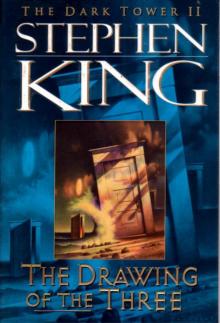 Darktower 2 - The Drawing of the Three
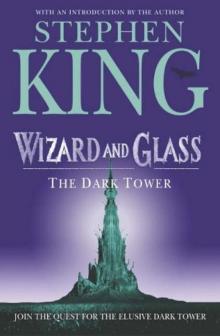 Wizard and Glass dt-4
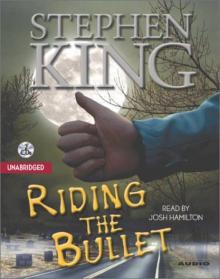 Riding The Bullet
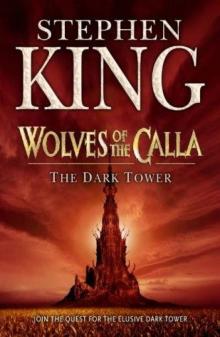 Wolves of the Calla dt-5
 L.T.'S Theory Of Pets
 The Langoliers fpm-1
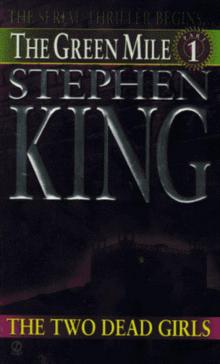 The Two Dead Girls
 The Blue Air Compressor
 Everything's Eventual
 You, Human: An Anthology of Dark Science Fiction
 The Night of The Tiger
 The Regulators (richard bachman)
 Elevation
 The Road Virus Heads North
 Good Marriage
 Four Past Midnight - 5 - The Library Policeman
 Grey Matter
 Herman Wouk Is Still Alive
 In the Tall Grass
 Six Scary Stories
 Foreward
 The Crate
 The wind through the keyhole adt-8
 King, Stephen - Battleground
 The Wedding Gig
 11/22/63: A Novel
 The Long Walk