
- Home
- Stephen King
Roadwork Page 26
Roadwork Read online
Page 26
“Say no if you have to.”
“No, no, no, you don’t get it. If she’s still in Vegas and going under this Olivia Brenner name I think I can find her and three grand is more than fair. It doesn’t hurt me one way or the other. But you spook me, Dawes. You’re really locked on course.”
“Yes.”
Magliore frowned down at the pictures of himself, his wife, and his children under the glass top of his desk.
“All right,” Magliore said. “This one last time, all right. But no more, Dawes. Absolutely not. If I ever see you again or hear you on the phone, you can forget it. I mean that. I got enough problems of my own without diddling around in yours.”
“I agree to that condition.”
He stuck out his hand, not sure that Magliore would shake it, but Magliore did.
“You make no sense to me,” Magliore said. “Why should I like a guy who makes no sense to me?”
“It’s a senseless world,” he said. “If you doubt it, just think about Mr. Piazzi’s dog.”
“I think about her a lot,” Magliore said.
January 16, 1974
He took the manila envelope containing the checkbook down to the post office box on the comer and mailed it. That evening he went to see a movie called The Exorcist because Max von Sydow was in it and he had always admired Max von Sydow a great deal. In one scene of the movie a little girl puked in a Catholic priest’s face. Some people in the back row cheered.
January 17, 1974
Mary called on the phone. She sounded absurdly relieved, gay, and that made everything much easier.
“You sold the house,” she said.
“That’s right.”
“But you’re still there.”
“Only until Saturday. I’ve rented a big farmhouse in the country. I’m going to try and get my act back together.”
“Oh, Bart. That’s so wonderful. I’m so glad.” He realized why it was being so easy. She was being phony. She wasn’t glad or not glad. She had given up.” About the checkbook…”
“Yes.”
“You split the money right down the middle, didn’t you?”
“Yes I did. If you want to check, you can call Mr. Fenner.”
“No. Oh, I didn’t mean that.” And he could almost see her making pushingaway gestures with her hands. “What I meant was… you separating the money like that… does it mean…”
She trailed off artfully and he thought: Ow, you bitch, you got me. Bull’s eye.
“Yes, I guess it does,” he said. “Divorce.”
“Have you thought about it?” she asked earnestly, phonily. “Have you really-”
“I’ve thought about it a lot.”
“So have I. It seems like the only thing left to do. But I don’t hold anything against you, Bart. I’m not mad at you.”
My God, she’s been reading all those paperback novels. Next she’ll tell me she’s going back to school. He was surprised at his bitterness. He thought he had gotten past that part.
“What will you do?”
“I’m going back to school,” she said, and now there was no phoniness in her voice, now it was excited, shining. “I dug out my old transcript, it was still up in Mamma’s attic with all my old clothes, and do you know I only need twenty-four credits to graduate? Bart, that’s hardly more than a year!”
He saw Mary crawling through her mother’s attic and the image blended with one of himself sitting bewildered in a pile of Charlie’s clothes. He shut it out.
“Bart? Are you still there?”
“Yes. I’m glad being single again is going to fulfill you so nicely.”
“Bart,” she said reproachfully.
But there was no need to snap at her now, to tease her or make her feel bad.
Things had gone beyond that. Mr. Piazzi’s dog, having bitten, moves on. That struck him funny and he giggled.
“Bart, are you crying?” She sounded tender. Phony, but tender.
“No,” he said bravely.
“Bart, is there anything I can do? If there is, I want to.”
“No. I think I’m going to be fine. And I’m glad you’re going back to school. Listen, this divorce-who gets it? You or me?”
“I think it would look better if I did,” she said timidly.
“Okay. Fine.”
There was a pause between them and suddenly she blurted into it, as if the words had escaped without her knowledge or approval: “Have you slept with anyone since I left?”
He thought the question over, and ways of answering: the truth, a lie, an evasion that might keep her awake tonight.
“No,” he said carefully, and added: “Have you?”
“Of course not,” she said, managing to sound shocked and pleased at the same time. “I wouldn’t.”
“You will eventually.”
“Bart, let’s not talk about sex.”
“All right,” he said placidly enough, although it was she who had brought the subject up. He kept searching for something nice to say to her, something that she would remember. He couldn’t think of a thing, and furthermore didn’t know why he would want her to remember him at all, at least at this stage of things. They had had good years before. He was sure they must have been good because he couldn’t remember much of what had happened in them, except maybe the crazy TV bet.
He heard himself say: “Do you remember when we took Charlie to nursery school the first time?”
“Yes. He cried and you wanted to take him back with us. You didn’t want to let him go, Bart.”
“And you did.”
She was saying something disclaiming in a slightly wounded tone, but he was remembering the scene. The lady who kept the nursery school was Mrs. Ricker. She had a certificate from the state, and she gave all the children a nice hot lunch before sending them home at one o’clock. School was kept downstairs in a madeover basement and as they led Charlie down between them, he felt like a traitor; like a farmer petting a cow and saying Soo, Bess on the way to the slaughterhouse. He had been a beautiful boy, his Charlie. Blond hair that had darkened later, blue, watchful eyes, hands that had been clever even as a toddler. And he had stood between them at the bottom of the stairs, stock-still, watching the other children who were whooping and running and coloring and cutting colored paper with bluntnosed scissors, so many of them, and Charlie had never looked so vulnerable as he did in that instant, just watching the other children. There was no joy or fear in his eyes, only the watchfulness, a kind of outsiderness, and he had never felt so much his son’s father as then, never so close to the actual run of his thoughts. And Mrs. Ricker came over, smiling like a barracuda and she said: We’ll have such fun, Chuck, making him want to cry out: That’s not his name! And when she put out her hand Charlie did not take it but only watched it so she stole his hand and began to pull him a little toward the others, and he went willingly two steps and then stopped, looked back at them, and Mrs. Young said very quietly: Go right along, he’ll be fine. And Mary finally had to poke him and say Come ON, Bart because he was frozen looking at his son, his son’s eyes saying, Are you going to let them do this to me, George? and his own eyes saying back, Yes, I guess I am, Freddy and he and Mary started up the stairs, showing Charlie their backs, the most dreadful thing a little child can see, and Charlie began to wail. But Mary’s footsteps never faltered because a woman’s love is strange and cruel and nearly always clear-sighted, love that sees is always horrible love, and she knew walking away was right and so she walked, dismissing the cries as only another part of the boy’s development, like smiles from gas or scraped knees. And he had felt a pain in his chest so sharp, so physical, that he had wondered if he was having a heart attack, and then the pain had just passed, leaving him shaken and unable to interpret it, but now he thought that the pain had been plain old prosaic good-bye. Parents’ backs aren’t the most dreadful thing. The most dreadful thing of all is the speed with which children dismiss those same backs and turn to their own affairs-to the game, the pu
zzle, the new friend, and eventually to death. Those were the awful things he had come to know now. Charlie had begun dying long before he got sick, and there was no putting a stop to it.
“Bart?” she was saying. “Are you still there, Bart?”
“I’m here.”
“What good are you doing yourself thinking about Charlie all the time? It’s eating you up. You’re his prisoner.”
“But you’re free,” he said. “Yes.”
“Shall I see the lawyer next week?”
“Okay. Fine.”
“It doesn’t have to be nasty, does it, Bart?”
“No. It will be very civilized.”
“You won’t change your mind and contest it?”
“No.”
“I’ll… I’ll be talking to you, then.”
“You knew it was time to leave him and so you did. I wish to God I could be that instinctive.”
“What?”
“Nothing. Good-bye, Mary. I love you.” He realized he had said it after he hung up. He had said it automatically, with no feeling-verbal punctuation. But it wasn’t such a bad ending. Not at all.
January 18, 1974
The secretary’s voice said: “Who shall I say is calling?”
“Bart Dawes.”
“Will you hold for a moment?”
“Sure.”
She put him in limbo and he held the blank receiver to his ear, tapping his foot and looking out the window at the ghost town of Crestallen Street West. It was a bright day but very cold, temperature about 10 above with a chill factor making it 10 below. The wind blew skirls of snow across the street to where the Hobarts’ house stood broodingly silent, just a shell waiting for the wrecking ball. They had even taken their shutters.
There was a click and Steve Ordner’s voice said: “Bart, how are you?”
“Fine.”
“What can I do for you?”
“I called about the laundry,” he said. “I wondered what the corporation had decided to do about relocation.”
Ordner sighed and then said with good-humored reserve: “A little late for that, isn’t it?”
“I didn’t call to be beaten with it, Steve.”
“Why not? You’ve surely beaten everyone else with it. Well, never mind. The board has decided to get out of the industrial laundry business, Bart. The Laundromats will stay; they’re all doing well. We’re going to change the chain name, though. To Handi-Wash. How does that sound?”
“Terrible,” he said remotely. “Why don’t you sack Vinnie Mason?”
“Vinnie?” Ordner sounded surprised. “Vinnie’s doing a great job for us. Turning into quite the mogul. I must say I didn’t expect such bitterness-”
“Come on, Steve. That job’s got no more future than a tenement airshaft. Give him something worthwhile or let him out.”
“I handy think that’s your business, Bart.”
“You’ve got a dead chicken tied around his neck and he doesn’t know it yet because it hasn’t started to rot. He still thinks it’s dinner.”
“I understand he punched you up a little before Christmas.”
“I told him the truth and he didn’t like it.”
“Truth’s a slippery word, Bart. I would think you’d understand that better than anyone, after all the lies you told me.
“That still bugs you, doesn’t it?”
“When you discover that a man you thought was a good man is full of shit, it does tend to bug one, yes.”
“Bug one,” he repeated. “Do you know something, Steve? You’re the only person I’ve ever known in my life that would say that. Bug one. It sounds like something that comes in a fucking aerosol can.”
“Was there anything else, Bart?”
“No, not really. I wish you’d stop beating Vinnie, that’s all. He’s a good man. You’re wasting him. And you know goddam well you’re wasting him.”
“I repeat: why would I want to 'beat' Vinnie?”
“Because you can’t get to me.”
“You’re getting paranoid, Bart. I’ve got no desire to do anything to you but forget you.”
“Is that why you were checking to see if I ever had personal laundry done free? Or took kickbacks from the motels? I understand you even took the petty cash vouchers for the last five years or so.”
“Who told you that?” Ordner barked. He sounded startled, off balance.
“Somebody in your organization,” he lied joyfully. “Someone who doesn’t like you much. Someone who thought I might be able to get the ball rolling a little in time for the next director’s meeting.”
“Who?”
“Good-bye, Steve. You think about Vinnie Mason, and I’ll think about who I might or might not talk to.”
“Don’t you hang up on me! Don’t you-”
He hung up, grinning. Even Steve Ordner had the proverbial feet of clay. Who was it Steve reminded him of? Ball bearings. Strawberry ice cream stolen from the food locker. Herman Wouk. Captain Queeg, that was it. Humphrey Bogart had played him in the movie. He laughed aloud and sang:
“We all need someone to Queeg on,
And if you want to, why don’tcha Queeg all over me?”
I’m crazy all right, he thought, still laughing. But it does seem there are certain advantages. It came to him that one of the surest signs of insanity was a man all alone, laughing in the middle of silence, on an empty street filled with empty houses. But the thought could not still his humor and he laughed louder, standing by the telephone and shaking his head and grinning.
January 19, 1974
After dark he went out to the garage and brought in the guns. He loaded the Magnum carefully, according to the directions in the instruction pamphlet, after dryfiring it several times. The Rolling Stones were on the stereo, singing about the Midnight Rambler. He couldn’t get over what a fine album that was. He thought about himself as Barton George Dawes, Midnight Rambler, Visits by Appointment Only.
The.460 Weatherbee took eight shells. They looked big enough to fit a medium howitzer. When the rifle was loaded he looked at it curiously, wondering if it was as powerful as Dirty Harry Swinnerton had claimed. He decided to take it out behind the house and fire it. Who was there on Crestallen Street West to report gunshots?
He put on his jacket and started out the back door through the kitchen, then went back to the living room and got one of the small pillows that lay on the couch. Then he went outside, pausing to flick on the 200-watt yard light that he and Mary had used in the summer for backyard barbecues. Back here, the snow was as he had pictured it in his mind a little more than a week ago-untouched, unmarred, totally virgin. No one had foot-fucked this snow. In past years Don Upslinger’s boy Kenny sometimes used the backyard express to get up to his friend Ronnie’s house. Or Mary used the line he had strung kitty-corner between the house and garage to hang a few things (usually unmentionables) on days when it was too warm for them to freeze. But he himself always went to the garage by the breezeway and now it struck him as sort of marvelous-no one had been in his backyard since snow first fell, in late November. Not even a dog, by the look of it.
He had a sudden crazy urge to stride out into the middle, about where he set the hibachi every summer, and make a snow angel.
Instead he tucked the pillow up against his right shoulder, held it for a moment with his chin, and then pressed the butt plate of the Weatherbee against it. He glared down the sight with his left eye shut, and tried to remember the advice the actors always gave each other just before the gyrenes hit the beaches in the late-night war movies. Usually it was some seasoned veteran like Richard Widmark talking to some green private-Martin Milner, perhaps: Don’t jerk that trigger, son-SQUEEZE it.
Okay, Fred. Let’s see if I can hit my own garage.
He squeezed the trigger.
The rifle did not make a report. It made an explosion. At first he was afraid it had blown up in his hands. He knew he was alive when the recoil knocked him back against the kitchen storm door. The repor
t traveled off in all directions with a curious rolling sound, like jet exhaust. The pillow fell in the snow. His shoulder throbbed.
“Jesus, Fred!” he gasped.
He looked at his garage and was hardly able to believe it. There was a splintered hole in the siding big enough to fit a teacup through.
He leaned the gun against the kitchen storm door and walked through the snow, never minding the fact that he had his low shoes on. He examined the hole for a minute, bemusedly prying up loose splinters with his forefinger, and then he went around and inside.
The exit hole was bigger. He looked at his station wagon. There was a bullet hole in the driver’s side door, and the paint had been seared off to show bare metal around the concave hole, which was big enough for him to stick the tips of two fingers in. He opened the door and looked across the seat at the passenger door. Yes, the bullet had gone through there too, just below the door handle.
He walked around to the passenger side and saw where the bullet had exited, leaving another big hole, this time with tines of metal sticking balefully out. He turned and looked at the garage wall opposite where the bullet had entered. It had gone through that too. For all he knew, it was still going.
He heard Harry the gun shop proprietor saying: So your cousin gut-shoots… this baby will spread his insides over twenty feet. And what would it do to a man? Probably the same. It made him feel ill.
He walked back to the kitchen door, stooped to pick up his pillow, and went back into the house, pausing automatically to stamp his feet so he wouldn’t track across Mary’s kitchen. In the living room he took off his shirt. There was a red welt in the shape of the rifle’s butt plate on his shoulder in spite of the pillow.
He went into the kitchen with his shirt still off and fixed a pot of coffee and a TV dinner. When he finished his meal he went into the living room and laid down on the couch and began to cry, and the crying rose to a jagged, breaking hysteria which he heard and feared but could not control. At last it began to trail off and he fell heavily asleep, breathing harshly. In his sleep he looked old and some of the stubble on his cheeks was white.
 The Stand
 The Shining
 It
It The Dead Zone
 The Dark Tower
 The Gunslinger
 Song of Susannah
 Under the Dome
 The Mist
 Revival
 Misery
 Mile 81
 From a Buick 8
 Just After Sunset
 Black House
 Doctor Sleep
 The Drawing of the Three
 Wizard and Glass
 Dolores Claiborne
 Carrie
 The Little Sisters of Eluria
 The Waste Lands
 The Green Mile
 The Girl Who Loved Tom Gordon
 Cujo
Cujo The Outsider_A Novel
 The Tommyknockers
 Cell
Cell Pet Sematary
 The Talisman
 Four Past Midnight
 Different Seasons
 Needful Things
 Nightmares and Dreamscapes
 Christine
 The Running Man
 The Eyes of the Dragon
 11/22/63
 Firestarter
 Insomnia
 Finders Keepers
 Gerald's Game
 The Wind Through the Keyhole
 Hearts in Atlantis
 Danse Macabre
 Thinner
 Duma Key
 The Bachman Books
 Skeleton Crew
 The Outsider-Stephen King
 Full Dark, No Stars
 Salem's Lot
 Bag of Bones
 Desperation
 End of Watch
 Wolves of the Calla
 Mr. Mercedes
 Billy Summers
 Rose Madder
 Later
Later Gunslinger
 The Langoliers
 Joyland
 If It Bleeds
 Apt Pupil (Scribner Edition)
 Flight or Fright
 Everything's Eventual: 14 Dark Tales
 Night Shift
 The Dark Half
 On Writing
 The Institute
 A Death
 The Man in the Black Suit : 4 Dark Tales
 Bullet
 The Dark Tower tdt-7
 Chiral Mad 3
 Big Driver
 Stephen King: The Green Mile
 Dolan's Cadillac nad-1
 Head Down nad-22
 The Doctor's Case
 Luckey Quarter
 Rage (richard bachman)
 Black House js-2
 The Wind Through the Keyhole (Dark Tower)
 Duma Key: A Novel
 Dark Tower V, The
 Cycle of the Werewolf
 AUTOPSY ROOM FOUR
 Dark Tower VII, The (v. 7)
 Gramma
 Suffer the Little Children
 Chinga
 Word Processor of the Gods
 Lisey’sStory
 Dark Tower V (Prologue)
 The Stand (Original Edition)
 Rainy Season nad-13
 Transgressions
 The Plant
 Under the Dome: A Novel
 The Dark Tower II: The Drawing of the Three
 The End of the Whole Mess:
 Ur
Ur The Body
 Uncollected Stories 2003
 Chattery Teeth
 The Mouse on the Mile
 The Cat from Hell
![The Drawing of the Three [The Dark Tower II] Read online](http://i1.bookreadfree.com/i/03/25/the_drawing_of_the_three_the_dark_tower_ii_preview.jpg) The Drawing of the Three [The Dark Tower II]
The Drawing of the Three [The Dark Tower II] Cell: A Novel
 Uncle Otto's Truck
 Song of Susannah dt-6
 The Dark Tower VII
 Head Down
 Sneakers
 Crouch End
 Outsider
 End of Watch: A Novel (The Bill Hodges Trilogy Book 3)
 Revival: A Novel
 Everything's Eventual skssc-4
 The Colorado Kid
 Sleeping Beauties: A Novel
 The Dark Tower IV Wizard and Glass
 A Book of Horrors
 Four Past Midnight - 3 - Secret Window, Secret Garden
 The House on Maple Street
 Sometimes They Come Back
 Blockade Billy
 Crouch End nad-17
 Lunch at the Gotham Cafe
 The Waste Lands dt-3
 Six Stories
 A Face in the Crowd
 Case
Case Four Past Midnight - 2 - The Langoliers
 Umney's last case nad-21
 Survivor Type
 Guns (Kindle Single)
 You Know They Got a Hell of a Band
 The Jaunt
 In A Half World Of Terror
 Gwendy's Button Box
 Storm of the Century
 The Jaunt. Travel
 Roadwork
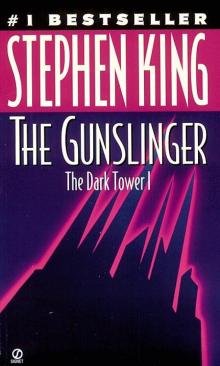 Darktower 1 - The Gunslinger
 Faithful
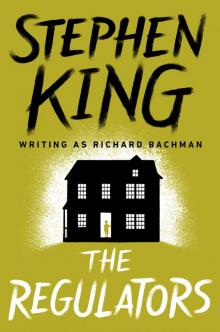 The Regulators
 A Bedroom in the Wee Hours of the Morning
 Graveyard Shift
 The Monkey
 Children of the Corn
 The Reploids
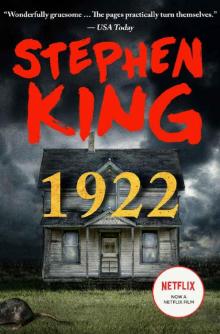 1922
1922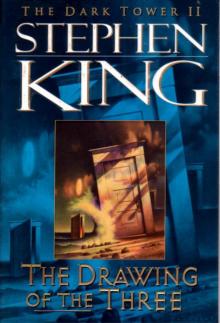 Darktower 2 - The Drawing of the Three
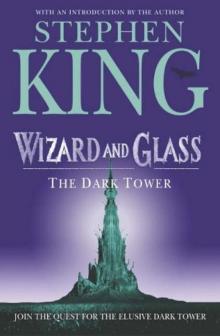 Wizard and Glass dt-4
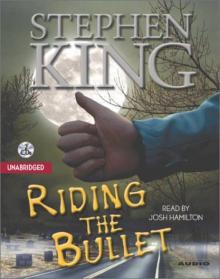 Riding The Bullet
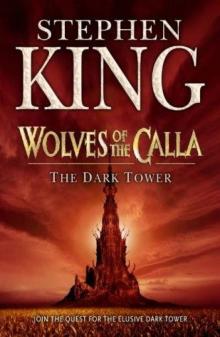 Wolves of the Calla dt-5
 L.T.'S Theory Of Pets
 The Langoliers fpm-1
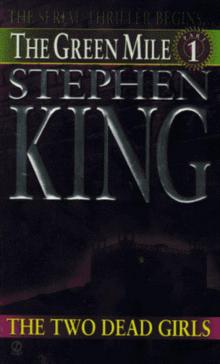 The Two Dead Girls
 The Blue Air Compressor
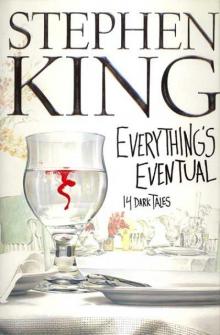 Everything's Eventual
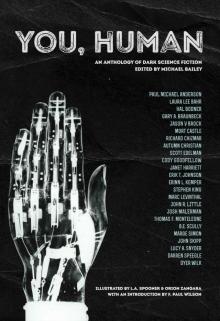 You, Human: An Anthology of Dark Science Fiction
 The Night of The Tiger
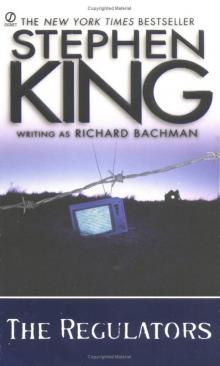 The Regulators (richard bachman)
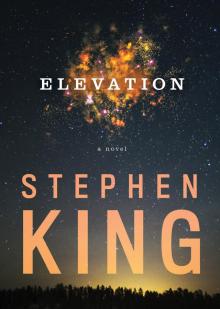 Elevation
 The Road Virus Heads North
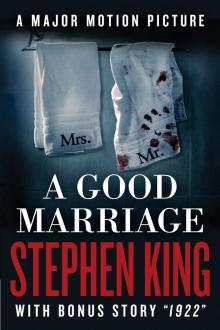 Good Marriage
 Four Past Midnight - 5 - The Library Policeman
 Grey Matter
 Herman Wouk Is Still Alive
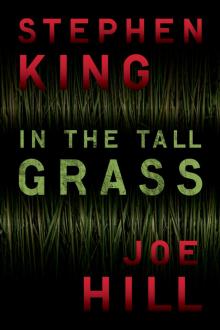 In the Tall Grass
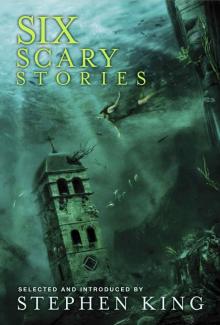 Six Scary Stories
 Foreward
 The Crate
 The wind through the keyhole adt-8
 King, Stephen - Battleground
 The Wedding Gig
 11/22/63: A Novel
 The Long Walk