
- Home
- Stephen King
The Dead Zone Page 14
The Dead Zone Read online
Page 14
“Yeah. I know.”
“Do you ever see her?”
“We write back and forth once in a while. We got acquainted after your accident. She’s a nice girl, real nice. She’s still teaching at Cleaves, but I understand she is getting done this June. She’s happy, John.”
“Good,” he said thickly. “I’m glad someone is.”
“Son ... ”
“I hope you’re not telling secrets,” Vera Smith said brightly, coming back into the room. She had an ice-clogged pitcher in one hand. “They said you weren’t ready for fruit juice, Johnny, so I brought you the ginger ale.”
“That’s fine, Mom.”
She looked from Herb to Johnny and back to Herb again. “Have you been telling secrets? Why the long faces?”
“I was just telling Johnny he’s going to have to work hard if he wants to get but of here,” said Herb. “Lots of therapy.”
“Now why would you want to talk about that now?” She poured ginger ale into Johnny’s glass. “Everything’s going to be fine now. You’ll see.”
She popped a flexible straw into the glass and handed it to him.
“Now you drink all of it,” she said, smiling. “It’s good for you.”
Johnny did drink all of it. It tasted bitter.
Chapter 7
1
“Close your eyes,” Dr. Weizak said.
He was a small, roly-poly man with an incredible styled head of hair and spade sideburns. Johnny couldn’t get over all that hair. A man with a haircut like that in 1970 would have had to fight his way out of every bar in eastern Maine, and a man Weizak’s age would have been considered ripe for committal.
All that hair. Man.
He closed his eyes. His head was covered with electrical contact points. The contacts went to wires that fed into a wall-console EEG. Dr. Brown and a nurse stood by the console, which was calmly extruding a wide sheet of graph paper. Johnny wished the nurse could have been Marie Michaud. He was a little scared.
Dr. Weizak touched his eyelids and Johnny jerked.
“Nuh ... hold still, Johnny. These are the last two. Just ... there.”
“All right, Doctor,” the nurse said.
A low hum.
“All right, Johnny. Are you comfortable?”
“Feels like there are pennies on my eyelids.”
“Yes? You’ll get used to that in no time. Now let me explain to you this procedure. I am going to ask you to visualize a number of things. You will have about ten seconds on each, and there are twenty things to visualize in all. You understand?”
“Yes.”
“Very fine. We begin. Dr. Brown?”
“All ready.”
“Excellent. Johnny, I ask you to see a table. On this table there is an orange.”
Johnny thought about it. He saw a small card-table with folding steel legs. Resting on it, a little off-center, was a large orange with the word SUNKIST stamped on its pocky skin.
“Good,” Weizak said.
“Can that gadget see my orange?”
“Nuh ... well, yes; in a symbolic way it can. The machine is tracing your brainwaves. We are searching for blocks, Johnny. Areas of impairment. Possible indications of continuing inter-cranial pressure. Now I ask you to shush with the questions.”
“All right.”
“Now I ask you to see a television. It is on, but not receiving a station.”
Johnny saw the TV that was in the apartment—had been in his apartment. The screen was bright gray with snow. The tips of the rabbit ears were wrapped with tinfoil for better reception.
“Good.”
The series went on. For the eleventh item Weizak said, “Now I ask you to see a picnic table on the left side of a green lawn.”
Johnny thought about it, and in his mind he saw a lawn chair. He frowned.
“Something wrong?” Weizak asked.
“No, not at all,” Johnny said. He thought harder. Picnics. Weiners, a charcoal brazier ... associate, dammit, associate. How hard can it be to see a picnic table in your mind, you’ve only seen a thousand of them in your life; associate your way to it. Plastic spoons and forks, paper plates, his father in a chefs hat, holding a long fork in one hand and wearing an apron with a motto printed across it in tipsy letters. THE COOK NEEDS A DRINK. His father making burgers and then they would all go sit at the—
Ah, here it came!
Johnny smiled, and then the smile faded. This time the image in his mind was of a hammock. “Shit!”
“No picnic table?”
“It’s the weirdest thing. I can’t quite ... seem to think of it. I mean, I know what it is, but I can’t see it in my mind. Is that weird, or is that weird?”
“Never mind. Try this one: a globe of the world, sitting on the hood of a pickup truck.”
That one was easy.
On the nineteenth item, a rowboat lying at the foot of a street sign (who thinks these things up? Johnny wondered), it happened again. It was frustrating. He saw a beachball lying beside a gravestone. He concentrated harder and saw a turnpike overpass. Weizak soothed him, and a few moments later the wires were removed from his head and eyelids.
“Why couldn’t I see those things?” he asked, his eyes moving from Weizak to Brown. “What’s the problem?”
“Hard to say with any real certainty,” Brown said. “It may be a kind of spot amnesia. Or it may be that the accident destroyed a small portion of your brain—and I mean a really microscopic bit. We don’t really know what the problem is, but it’s pretty obvious that you’ve lost a number of trace memories. We happened to strike two. You’ll probably come across more.”
Weizak said abruptly, “You sustained a head injury when you were a child, yes?”
Johnny looked at him doubtfully.
“There is an old scar,” Weizak said. “There is a theory, Johnny, backed by a good deal of statistical research ...”
“Research that is nowhere near complete,” Brown said, almost primly.
“That is true. But this theory supposes that the people who tend to recover from long-term coma are people who have sustained some sort of brain injury at a previous time ... it is as though the brain has made some adaptation as the result of the first injury that allows it to survive the second.”
“It’s not proven,” Brown said. He seemed to disapprove of Weizak even bringing it up.
“The scar is there,” Weizak said. “Can you not remember what happened to you, Johnny? I would guess you must have blacked out. Did you fall down the stairs? A bicycle accident, perhaps? The scar says this happened to a young boy.”
Johnny thought hard, then shook his head. “Have you asked my mom and dad?”
“Neither of them can remember any sort of head injury ... nothing occurs to you?”
For a moment, something did—a memory of smoke, black and greasy and smelling like rubber. Cold. Then it was gone. Johnny shook his head.
Weizak sighed, then shrugged. “You must be tired.”
“Yes. A little bit.”
Brown sat on the edge of the examination table. “It’s quarter of eleven. You’ve worked hard this morning. Dr. Weizak and I will answer a few questions, if you like, then you go up to your room for a nap. Okay?”
“Okay,” Johnny said. “The pictures you took of my brain ...
“The CAT-scan,” Weizak nodded. “Computerized Axial Tomography.” He took a box of Chiclets and shook three of them into his mouth. “The CAT-scan is really a series of brain X-rays, Johnny. The computer highlights the pictures and ...”
“What did it tell you? How long have I got?”
“What is this how long have I got stuff?” Brown asked. “It sounds like a line from an old movie.”
“I’ve heard that people who come out of long-term comas don’t always last so long,” Johnny said. “They lapse back. It’s like a light bulb going really bright before it bums out for good.”
Weizak laughed hard. It was a hearty, bellowing laugh, and it was som
ething of a wonder that he didn’t choke on his gum. “Oh, such melodrama.” He put a hand on Johnny’s chest. “You think Jim and I are babies in this field? Nuh. We are neurologists. What you Americans call high-priced talent. Which means we are only stupid about the functions of the human brain instead of out-and-out ignoramuses. So I tell you, yes, there have been lapse-backs. But you will not lapse. I think we can say that, Jim, yes, okay?”
“Yes,” Brown said. “We haven’t been able to find very much in the way of significant impairment. Johnny, there’s a guy in Texas who was in a coma for nine years. Now he’s a bank loan officer, and he’s been doing that job for six years. Before that he was a teller for two years. There’s a woman in Arizona who was down for twelve years. Something went wrong with the anesthesia while she was in labor. Now she’s in a wheelchair, but she’s alive and aware. She came out of it in 1969 and met the baby she had delivered twelve years before. The baby was in the seventh grade and an honors student.”
“Am I going to be in a wheelchair?” Johnny asked. “I can’t straighten my legs out. My arms are a little better, but my legs ...” He trailed off, shaking his head.
“The ligaments shorten,” Weizak said. “Yes? That’s why comatose patients begin to pull into what we call the prefetal position. But we know more about the physical degeneration that occurs in coma than we used to, we are better at holding it off. You have been exercised regularly by the hospital physical therapist, even in your sleep. And different patients react to coma in different ways. Your deterioration has been quite slow, Johnny. As you say, your arms are remarkably responsive and able. But there has been deterioration. Your therapy will be long and ... should I lie to you? Nuh, I don’t think so. It will be long and painful. You will shed your tears. You may come to hate your therapist. You may come to fall in love with your bed. And there will be operations—only one if you are very, very lucky, but perhaps as many as four—to lengthen those ligaments. These operations are still new. They may succeed completely, partially, or not at all. And yet as God wills it, I believe you will walk again. I don’t believe you will ever ski or leap hurdles, but you may run and you will certainly swim.”
“Thank you,” Johnny said. He felt a sudden wave of affection for this man with the accent and the strange haircut. He wanted to do something for Weizak in return—and with that feeling came the urge, almost the need, to touch him.
He reached out suddenly and took Weizak’s hand in both of his own. The doctor’s hand was big, deeply lined, warm.
“Yes?” Weizak said kindly. “And what is this?”
And suddenly things changed. It was impossible to say how. Except that suddenly Weizak seemed very clear to him. Weizak seemed to ... to stand forth, outlined in a lovely, clear light. Every mark and mole and line on Weizak’s face stood in relief. And every line told its own story. He began to understand.
“I want your wallet,” Johnny said.
“My ... ?” Weizak and Brown exchanged a startled glance.
“There’s a picture of your mother in your wallet and I need to have it,” Johnny said. “Please.”
“How did you know that?”
“Please!”
Weizak looked into Johnny’s face for a moment, and then slowly dug under his smock and produced an old Lord Buxton, bulgy and out of shape.
“How did you know I carry a picture of my mother? She is dead, she died when the Nazis occupied Warsaw ...”
Johnny snatched the wallet from Weizak’s hand. Both he and Brown looked stunned. Johnny opened it, dismissed the plastic picture-pockets, and dug in the back instead, his fingers hurrying past old business cards, receipted bills, a canceled check, an old ticket to some political function. He came up with a small snapshot that had been laminated in plastic. The picture showed a young woman, her features plain, her hair drawn back under a kerchief. Her smile was radiant and youthful. She held the hand of a young boy. Beside her was a man in the uniform of the Polish army.
Johnny pressed the picture between his hands and closed his eyes and for a moment there was darkness and then rushing out of the darkness came a wagon ... no, not a wagon, a hearse. A horse-drawn hearse. The lamps had been muffled in black sacking. Of course it was a hearse because they were
(dying by the hundreds, yes, by the thousands, no match for the panzers, the wehrmacht, nineteenth-century cavalry against the tanks and machine guns. explosions. screaming, dying men, a horse with its guts blown out and its eyes rolling wildly, showing the white, an overturned cannon behind it and still they come. weizak comes, standing in his stirrups, his sword held high in the slanting ruin of late summer 1939, his men following him, stumbling through the mud, the turret gun of the nazi tiger tank tracks him, braces him, brackets him, fires, and suddenly he is gone below the waist, the sword flying out of his hand; and down the road is Warsaw. the nazi wolf is loose in europe)
“Really, we have to put a stop to this,” Brown said, his voice faraway and worried. “You’re overexciting yourself, Johnny.”
The voices came from far away, from a hallway in time.
“He’s put himself in some kind of trance,” Weizak said.
Hot in here. He was sweating. He was sweating because
(the city’s on fire, thousands are fleeing, a truck is roaring from side to side down a cobbled street, and the back of the truck is full of waving german soldiers in coal-scuttle helmets and the young woman is not smiling now, she is fleeing, no reason not to flee. the child has been sent to safety and now the truck jumps the curb, the mudguard strikes her, shattering her hip and sending her flying through a plateglass window and into a clock shop and everything begins to chime. chime because of the time. the chime time is)
“Six o’clock,” Johnny said thickly. His eyes had rolled up to straining, bulging whites. “September 2, 1939, and all the cuckoo birds are singing.”
“Oh my God, what is it we have?” Weizak whispered. The nurse had backed up against the EEG console, her face pale and scared. Everyone is scared now because death is in the air. It’s always in the air in this place, this
(hospital. smell of ether. they’re screaming in the place of death. poland is dead, poland has fallen before the lightning warfare wehrmacht blitzkrieg. shattered hip. the man in the next bed calling for water, calling, calling, calling. she remembers “THE BOY IS SAFE. what boy? she doesn’t know. what boy? what is her name? she doesn’t remember. only that)
“The boy is safe,” Johnny said thickly. “Uh-huh. Uh-huh.”
“We have to put a stop to this,” Brown repeated.
“How do you suggest we do that?” Weizak asked, his voice brittle. “It has gone too far to ...”
Voices fading. The voices are under the clouds. Everything is under the clouds. Europe is under the clouds of war. Everything is under the clouds but the peaks, the mountain peaks of
(switzerland. switzerland and now her name is BORENTZ. her name is JOHANNA BORENTZ and her husband is an engineer or an architect, whichever it is that builds the bridges. he builds in switzerland and there is goat’s milk, goat’s cheese. a baby. ooooh the labor! the labor is terrible and she needs drugs, morphine, this JOHANNA BORENTZ, because of the hip. the broken hip. it has mended, it has gone to sleep, but now it awakes and begins to scream as her pelvis spreads to let the baby out. one baby. two. and three. and four. they don’t come all at once, no—they are a harvest of years. they are)
“The babies,” Johnny lilted, and now he spoke in a woman’s voice, not his own voice at all. It was the voice of a woman. Then gibberish in song came from his mouth.
“What in the name of God ...” Brown began.
“Polish, it is Polish!” Weizak cried. His eyes were bulging, his face pale. “It is a cradle song and it is in Polish, my God, my Christ, what is it we have here?”
Weizak leaned forward as if to cross the years with Johnny, as if to leap them, as if to
(bridge, a bridge, it’s in turkey. then a bridge somewhere hot in the far east, is it Laos?
can’t tell, lost a man there, we lost HANS there, then a bridge in virginia, a bridge over the RAP-PAHANNOCK RIVER and another bridge in california. we are applying for citizenship now and we go to classes in a hot little room in the back of a post-office where it always smells of glue. it is 1963, november, and when we hear kennedy has been killed in dallas we weep and when the little boy salutes his father’s coffin she thinks “THE BOY IS SAFE” and it brings back memories of some burning, some great burning and sorrow, what boy? she dreams about the boy. it makes her head hurt. and the man dies, HELMUT BORENTZ dies and she and the children live in carmel california. in a house on. on. on. can’t see the street sign, it’s in the dead zone, like the rowboat, like the picnic table on the lawn. it’s in the dead zone. like warsaw. the children go away, she goes to their graduation ceremonies one by one, and her hip hurts. one dies in vietnam. the rest of them are fine. one of them is building bridges. her name is JOHANNA BORENTZ and late at night alone now she sometimes thinks in the ticking darkness: “THE BOY IS SAFE.”)
Johnny looked up at them. His head felt strange. That peculiar light around Weizak had gone. He felt like himself again, but weak and a little pukey. He looked at the picture in his hands for a moment and then handed it back.
“Johnny?” Brown said. “Are you all right?”
“Tired,” he muttered.
“Can you tell us what happened to you?”
He looked at Weizak. “Your mother is alive,” he said.
“No, Johnny. She died many years ago. In the war.”
“A German trooptruck knocked her through a plate-glass show window and into a clock shop,” Johnny said. “She woke up in a hospital with amnesia. She had no identification, no papers. She took the name Johanna ... somebody. I didn’t get that, but when the war was over she went to Switzerland and married a Swiss ... engineer, I think. His specialty was building bridges, and his name was Helmut Borentz. So her married name was—is—Johanna Borentz.”
The nurse’s eyes were getting bigger and bigger. Dr. Brown’s face was tight, either because he had decided Johnny was having them all on or perhaps just because he didn’t like to see his neat schedule of tests disrupted. But Weizak’s face was still and thoughtful.
 The Stand
 The Shining
 It
It The Dead Zone
 The Dark Tower
 The Gunslinger
 Song of Susannah
 Under the Dome
 The Mist
 Revival
 Misery
 Mile 81
 From a Buick 8
 Just After Sunset
 Black House
 Doctor Sleep
 The Drawing of the Three
 Wizard and Glass
 Dolores Claiborne
 Carrie
 The Little Sisters of Eluria
 The Waste Lands
 The Green Mile
 The Girl Who Loved Tom Gordon
 Cujo
Cujo The Outsider_A Novel
 The Tommyknockers
 Cell
Cell Pet Sematary
 The Talisman
 Four Past Midnight
 Different Seasons
 Needful Things
 Nightmares and Dreamscapes
 Christine
 The Running Man
 The Eyes of the Dragon
 11/22/63
 Firestarter
 Insomnia
 Finders Keepers
 Gerald's Game
 The Wind Through the Keyhole
 Hearts in Atlantis
 Danse Macabre
 Thinner
 Duma Key
 The Bachman Books
 Skeleton Crew
 The Outsider-Stephen King
 Full Dark, No Stars
 Salem's Lot
 Bag of Bones
 Desperation
 End of Watch
 Wolves of the Calla
 Mr. Mercedes
 Billy Summers
 Rose Madder
 Later
Later Gunslinger
 The Langoliers
 Joyland
 If It Bleeds
 Apt Pupil (Scribner Edition)
 Flight or Fright
 Everything's Eventual: 14 Dark Tales
 Night Shift
 The Dark Half
 On Writing
 The Institute
 A Death
 The Man in the Black Suit : 4 Dark Tales
 Bullet
 The Dark Tower tdt-7
 Chiral Mad 3
 Big Driver
 Stephen King: The Green Mile
 Dolan's Cadillac nad-1
 Head Down nad-22
 The Doctor's Case
 Luckey Quarter
 Rage (richard bachman)
 Black House js-2
 The Wind Through the Keyhole (Dark Tower)
 Duma Key: A Novel
 Dark Tower V, The
 Cycle of the Werewolf
 AUTOPSY ROOM FOUR
 Dark Tower VII, The (v. 7)
 Gramma
 Suffer the Little Children
 Chinga
 Word Processor of the Gods
 Lisey’sStory
 Dark Tower V (Prologue)
 The Stand (Original Edition)
 Rainy Season nad-13
 Transgressions
 The Plant
 Under the Dome: A Novel
 The Dark Tower II: The Drawing of the Three
 The End of the Whole Mess:
 Ur
Ur The Body
 Uncollected Stories 2003
 Chattery Teeth
 The Mouse on the Mile
 The Cat from Hell
![The Drawing of the Three [The Dark Tower II] Read online](http://i1.bookreadfree.com/i/03/25/the_drawing_of_the_three_the_dark_tower_ii_preview.jpg) The Drawing of the Three [The Dark Tower II]
The Drawing of the Three [The Dark Tower II] Cell: A Novel
 Uncle Otto's Truck
 Song of Susannah dt-6
 The Dark Tower VII
 Head Down
 Sneakers
 Crouch End
 Outsider
 End of Watch: A Novel (The Bill Hodges Trilogy Book 3)
 Revival: A Novel
 Everything's Eventual skssc-4
 The Colorado Kid
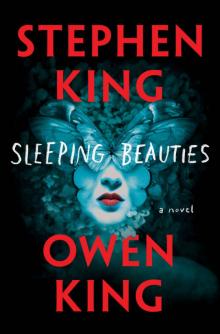 Sleeping Beauties: A Novel
 The Dark Tower IV Wizard and Glass
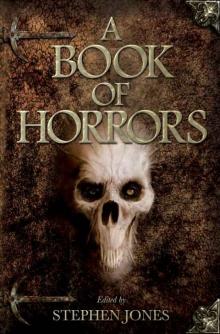 A Book of Horrors
 Four Past Midnight - 3 - Secret Window, Secret Garden
 The House on Maple Street
 Sometimes They Come Back
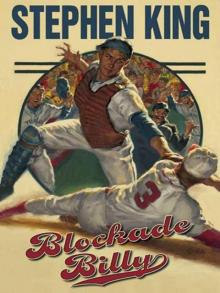 Blockade Billy
 Crouch End nad-17
 Lunch at the Gotham Cafe
 The Waste Lands dt-3
 Six Stories
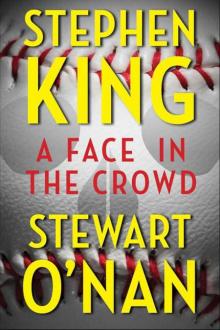 A Face in the Crowd
 Case
Case Four Past Midnight - 2 - The Langoliers
 Umney's last case nad-21
 Survivor Type
 Guns (Kindle Single)
 You Know They Got a Hell of a Band
 The Jaunt
 In A Half World Of Terror
 Gwendy's Button Box
 Storm of the Century
 The Jaunt. Travel
 Roadwork
 Darktower 1 - The Gunslinger
 Faithful
 The Regulators
 A Bedroom in the Wee Hours of the Morning
 Graveyard Shift
 The Monkey
 Children of the Corn
 The Reploids
 1922
1922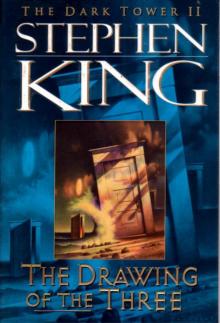 Darktower 2 - The Drawing of the Three
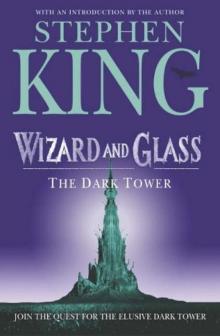 Wizard and Glass dt-4
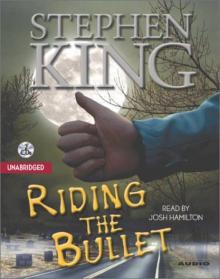 Riding The Bullet
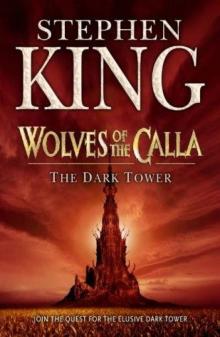 Wolves of the Calla dt-5
 L.T.'S Theory Of Pets
 The Langoliers fpm-1
 The Two Dead Girls
 The Blue Air Compressor
 Everything's Eventual
 You, Human: An Anthology of Dark Science Fiction
 The Night of The Tiger
 The Regulators (richard bachman)
 Elevation
 The Road Virus Heads North
 Good Marriage
 Four Past Midnight - 5 - The Library Policeman
 Grey Matter
 Herman Wouk Is Still Alive
 In the Tall Grass
 Six Scary Stories
 Foreward
 The Crate
 The wind through the keyhole adt-8
 King, Stephen - Battleground
 The Wedding Gig
 11/22/63: A Novel
 The Long Walk