
- Home
- Stephen King
Cell Page 12
Cell Read online
Page 12
Yes. But not this morning.
Feeling like a traitor to something larger than he could understand, he picked up Tom's ghetto blaster, put it back in the closet, and closed the door.
16
An hour or so later, the orderly migration to the east began to collapse. Clay was on watch. Alice was in the kitchen, eating one of the sandwiches they'd brought out of Boston--she said they had to finish the sandwiches before they ate any of the canned stuff in Tom's closet-sized pantry, because none of them knew when they'd get fresh meat again--and Tom was sleeping in the living room, on the couch. Clay could hear him snoring contentedly away.
He noticed a few people wandering against the general easterly flow, then sensed a kind of slackening in the order out there in Salem Street, something so subtle that his brain registered what his eye saw only as an intuition. At first he dismissed it as a falsity caused by the few wanderers--even more deranged than the rest--who were heading west instead of east, and then he looked down at the shadows. The neat herringbone patterns he had observed earlier had begun to distort. And soon they weren't patterns at all.
More people were now heading west, and some of them were gnawing on food that had been liberated from a grocery store, probably the Safeway Tom had mentioned. Mr. Scottoni's daughter-in-law, Judy, was carrying a gigantic tub of melting chocolate ice cream, which had covered the front of her smock and coated her from knees to nose-stud; her chocolate-lathered face made her look like Mrs. Bones in a minstrel show. And any vegetarian beliefs Mr. Potowami might once have held were gone now; he strolled along noshing from a great double handful of raw hamburger meat. A fat man in a dirty suit had what looked like a partially defrosted leg of lamb, and when Judy Scottoni tried to take it from him, the fat man hit her a vicious clip in the center of the forehead with it. She fell as silently as a poleaxed steer, pregnant belly first, on top of her mostly crushed tub of Breyers chocolate.
There was a great deal of milling now, and a good deal of violence to go with it, but no return to the all-out viciousness of the afternoon before. Not here, in any case. In Malden Center, the alarm, tired-sounding to begin with, had long since run down. In the distance, gunfire continued to pop sporadically, but there had been nothing close since that single shotgun blast from the center of town. Clay watched to see if any of the crazies would try breaking into any of the houses, but although they occasionally walked on the lawns, they showed no signs of graduating from trespass to burglary. What they did mostly was wander around, occasionally trying to grab one another's food, sometimes fighting or biting one another. Three or four--the Scottoni woman, for one--lay in the street, either dead or unconscious. Most of those who had passed Tom's house earlier were still in the town square, Clay guessed, having a street dance or maybe the First Annual Malden Raw Meat Festival, and thank God for that. It was strange, though, how that sense of purpose--that sense of flocking--had seemed to loosen and fall apart.
After noon, when he began to feel seriously sleepy, he went into the kitchen and found Alice dozing at the kitchen table with her head in her arms. The little sneaker, the one she had called a Baby Nike, was loosely clasped in one hand. When he woke her, she looked at him groggily and clasped it to the breast of her sweatshirt, as if afraid he would try to take it away.
He asked if she could watch from the end of the hallway for a while without falling asleep again or being seen. She said she could. Clay took her at her word and carried a chair for her. She paused for a moment at the door to the living room. "Check it out," she said.
He looked in over her shoulder and saw the cat, Rafe, was sleeping on Tom's belly. He grunted in amusement.
She sat where he put the chair, far enough inside the door so someone who glanced at the house wouldn't see her. After a single look she said, "They're not a flock anymore. What happened?"
"I don't know."
"What time is it?"
He glanced at his watch. "Twenty past twelve."
"What time did we notice they were flocking?"
"I don't know, Alice." He was trying to be patient with her but he could hardly keep his eyes open. "Six-thirty? Seven? I don't know. Does it matter?"
"If we could chart them, it might matter a lot, don't you think?"
He told her that he'd think about that when he'd had some sleep. "Couple of hours, then wake me or Tom," he said. "Sooner, if something goes wrong."
"It couldn't go much wronger," she said softly. "Go on upstairs. You look really wasted."
He went upstairs to the guest bedroom, slipped off his shoes, and lay down. He thought for a moment about what she'd said: If we could chart them. She might have something there. Odds against, but maybe--
It was a pleasant room, very pleasant, full of sun. You lay in a room like this and it was easy to forget there was a radio in the closet you didn't dare turn on. Not so easy to forget your wife, estranged but still loved, might be dead and your son--not just loved but adored--might be crazy. Still, the body had its imperatives, didn't it? And if there had ever been a room for an afternoon nap, this was the one. The panic-rat twitched but didn't bite, and Clay was asleep almost as soon as he closed his eyes.
17
This time Alice was the one who shook him awake. The little purple sneaker swung back and forth as she did it. She had tied it around her left wrist, turning it into a rather creepy talisman. The light in the room had changed. It was going the other way, and diminished. He had turned on his side and he had to urinate, a reliable sign that he had slept for some time. He sat up in a hurry and was surprised--almost appalled--to see it was quarter of six. He had slept for over five hours. But of course last night hadn't been his first night of broken rest; he'd slept poorly the night before, as well. Nerves, on account of his presentation to the Dark Horse comics people.
"Is everything all right?" he asked, taking her by the wrist. "Why'd you let me sleep so long?"
"Because you needed it," she said. "Tom slept until two and I slept until four. We've been watching together since then. Come down and look. It's pretty amazing."
"Are they flocking again?"
She nodded. "But going the other way this time. And that's not all. Come and see."
He emptied his bladder and hurried downstairs. Tom and Alice were standing in the doorway to the porch with their arms around each other's waist. There was no question of being seen, now; the sky had clouded over and Tom's porch was already thick with shadows. Only a few people were left on Salem Street, anyway. All of them were moving west, not quite running but going at a steady clip. A group of four went past in the street itself, marching over a sprawl of bodies and a litter of discarded food, which included the leg of lamb, now gnawed down to the bone, a great many torn-open cellophane bags and cardboard boxes, and a scattering of discarded fruits and vegetables. Behind them came a group of six, the ones on the end using the sidewalks. They didn't look at each other but were still so perfectly together that when they passed Tom's house they seemed for an instant to be only a single man, and Clay realized even their arms were swinging in unison. After them came a youth of maybe fourteen, limping along, bawling inarticulate cow-sounds, and trying to keep up.
"They left the dead and the totally unconscious ones," Tom said, "but they actually helped a couple who were stirring."
Clay looked for the pregnant woman and didn't see her. "Mrs. Scottoni?"
"She was one of the ones they helped," Tom said.
"So they're acting like people again."
"Don't get that idea," Alice said. "One of the men they tried to help couldn't walk, and after he fell down a couple of times, one of the guys who'd been lifting him got tired of being a Boy Scout and just--"
"Killed him," Tom said. "Not with his hands, either, like the guy in the garden. With his teeth. Tore out his throat."
"I saw what was going to happen and looked away," Alice said, "but I heard it. He... squealed."
"Easy," Clay said. He squeezed her arm gently. "Take it easy."
Now the street was almost entirely empty. Two more stragglers came along, and although they moved more or less side by side, both were limping so badly there was no sense of unison about them.
"Where are they going?" Clay asked.
"Alice thinks maybe inside," Tom said, and he sounded excited. "Before it gets dark. She could be right."
"Where? Where are they going in? Have you seen any of them going into houses along this block?"
"No." They said it together.
"They didn't all come back," Alice said. "No way did as many come back up Salem Street as went down this morning. So a lot are still in Malden Center, or beyond. They may have gravitated toward public buildings, like school gymnasiums..."
School gymnasiums. Clay didn't like the sound of that.
"Did you see that movie, Dawn of the Dead?" she asked.
"Yes," Clay said. "You're not going to tell me someone let you in to see it, are you?"
She looked at him as if he were nuts. Or old. "One of my friends had the DVD. We watched it at a sleepover back in eighth grade." Back when the Pony Express still rode and the plains were dark with buffalo, her tone said. "In that movie, all the dead people--well, not all, but a lot--went back to the mall when they woke up."
Tom McCourt goggled at her for a second, then burst out laughing. It wasn't a little laugh, either, but a long series of guffaws, laughter so hard he had to lean against the wall for support, and Clay thought it wise to shut the door between the hall and the porch. There was no telling how well the things straggling up the street might hear; all he could think of at the moment was that the hearing of the lunatic narrator in Poe's "The Tell-Tale Heart" had been extremely keen.
"Well they did," Alice said, putting her hands on her hips. The baby sneaker flopped. "Straight to the mall." Tom laughed even harder. His knees buckled and he oozed slowly down to the hall floor, howling and flapping his hands against his shirt.
"They died ... ," he gasped, "... and came back ... to go to the mall. Jesus Christ, does Jerry F-Falwell..." He went off into another gale. Tears were now running down his cheeks in clear streams. He brought himself under control enough to finish, "Does Jerry Falwell know heaven's the Newcastle Mall?"
Clay also began to laugh. So did Alice, although Clay thought she was a little bit pissed off that her reference had been greeted not with interest or even mild good humor but outright howls. Still, when people started laughing, it was hard not to join in. Even when you were pissed.
They had almost stopped when Clay said, apropos of nothing, "If heaven ain't a lot like Dixie, I don't want to go."
That set them off again, all three. Alice was still laughing when she said, "If they're flocking, then roosting for the night in gyms and churches and malls, people could machine-gun them by the hundreds."
Clay stopped laughing first. Then Tom stopped. He looked at her, wiping moisture out of his neat little mustache.
Alice nodded. The laughter had brought high color to her cheeks, and she was still smiling. She had, at least for the moment, careened past pretty and into genuine beauty. "By the thousands, maybe, if they're all going to the same place."
"Jesus," Tom said. He took off his glasses and began to wipe them, too. "You don't fool around."
"It's survival," Alice said matter-of-factly. She looked down at the sneaker tied to her wrist, then up at the men. She nodded again. "We ought to chart them. Find out if they 're flocking and when they're flocking, If they're roosting and where they're roosting. Because if they can be charted--"
18
Clay had led them out of Boston, but when the three of them left the house on Salem Street some twenty-four hours later, fifteen-year-old Alice Maxwell was unquestionably in charge. The more Clay thought about it, the less it surprised him.
Tom McCourt didn't lack for what his British cousins called bottle, but he was not and never would be a natural leader. Clay had some leadership qualities, but that evening Alice had an advantage beyond her intelligence and desire to survive: she had suffered her losses and begun to move on. In leaving the house on Salem Street, both men were dealing with new ones. Clay had begun to suffer a rather frightening depression that at first he thought was just the result of his decision--unavoidable, really--to leave his portfolio behind. As the night went on, however, he realized it was a profound dread of what he might find if and when he got to Kent Pond.
For Tom, it was simpler. He hated to leave Rafe.
"Prop the door open for him," Alice said--the new and harder Alice, who seemed more decisive by the minute. "He'll almost certainly be okay, Tom. He'll find plenty of forage. It'll be a long time before the cats starve or the phone-crazies work their way down the food-chain to cat-meat."
"He'll go feral," Tom said. He was sitting on the living room couch, looking stylish and miserable in a belted raincoat and trilby hat. Rafer was on his lap, purring and looking bored.
"Yeah, that's what they do," Clay said. "Think of all the dogs--the little ones and the oversized ones--that are just going to flat die."
"I've had him for a long time. Since he was a kitten, really." He looked up and Clay saw the man was on the verge of tears. "Also, I guess I see him as my luck. My mojo. He saved my life, remember."
"Now we're your mojo," Clay said. He didn't want to point out that he himself had almost certainly saved Tom's life once already, but it was true. "Right, Alice?"
"Yep," she said. Tom had found a poncho for her, and she wore a knapsack on her back, although there currently was nothing in it but batteries for the flashlights... and, Clay was quite sure, that creepy little sneaker, which was at least no longer tied to her wrist. Clay was also carrying batteries in his pack, along with the Coleman lantern. They had nothing else, at Alice's suggestion. She said there was no reason for them to carry what they could pick up along the way. "We're the Three Musketeers, Tom--all for one and one for all. Now let's go over to the Nickle-bys' house and see if we can get some muskets."
"Nickerson." He was still stroking the cat.
She was smart enough--and compassionate enough, maybe that, too--not to say something like Whatever, but Clay could see she was getting low in the patience department. He said, "Tom. Time to go."
"Yeah, I suppose." He started to put the cat aside, then picked it up and kissed it firmly between the ears. Rafe bore it with no more than a slight narrowing of the eyes. Tom put it down on the sofa and stood. "Double rations in the kitchen by the stove, kiddo," he said. "Plus a big bowl of milk, with the rest of the half 'n' half poured in for good measure. Back door's open. Try to remember where home is, and maybe... hey, maybe I'll see you."
The cat jumped down and walked out of the room toward the kitchen with its tail up. And, true to its kind, it never looked back.
Clay's portfolio, bent and with a horizontal wrinkle running both ways from the knife-slash in the middle, leaned against the living room wall. He glanced at it on the way by and resisted an urge to touch it. He thought briefly of the people inside he'd lived with so long, both in his little studio and in the much wider (or so he liked to flatter himself) reaches of his imagination: Wizard Flak, Sleepy Gene, Jumping Jack Flash, Poison Sally. And the Dark Wanderer, of course. Two days ago he'd thought that maybe they were going to be stars. Now they had a hole running through them and Tom McCourt's cat for company.
He thought of Sleepy Gene leaving town on Robbie the Robo-Cayuse, saying S-So l-long b-boys! Meh-Meh-Mebbe I'll b-be back this w-w-way again!
"So long, boys," he said out loud--a little self-conscious but not very. It was the end of the world, after all. As farewells went, it wasn't much, but it would have to do... and as Sleepy Gene might also have said, It sh-sh-sure beats a p-poke in the eye with a ruh-ruh-rusty b-brandin'-arn.
Clay followed Alice and Tom out onto the porch, into the sound of soft autumn rain.
19
Tom had his trilby, there was a hood on Alice's poncho, and Tom had found Clay a Red Sox cap that would keep his head dry fo
r a while, at least, if the light rain didn't get heavier. And if it did... well, forage shouldn't be a problem, as Alice had pointed out. That would surely include foul-weather gear. From the slight elevation of the porch they could see roughly two blocks of Salem Street. It was impossible to be sure in the failing light, but it appeared completely deserted except for a few bodies and the food-litter the crazies had left behind.
Each of them was wearing a knife seated in scabbards Clay had made. If Tom was right about the Nickersons, they would soon be able to do better. Clay hoped so. He might be able to use the butcher knife from Soul Kitchen again, but he still wasn't sure he would be able to use it in cold blood.
Alice held a flashlight in her left hand. She looked to make sure Tom had one, too, and nodded. "Okay," she said. "You take us to the Nickerson house, right?"
"Right," Tom said.
"And if we see someone on our way there, we stop right away and put our lights on them." She looked at Tom, then Clay, with some anxiety. They had been over this before. Clay guessed she probably obsessed the same way before big tests... and of course this was a very big one.
"Right," Tom said. "We say, 'Our names are Tom, Clay, and Alice. We're normal. What are your names?' "
Clay said, "If they have flashlights like us, we can almost assume--"
"We can't assume anything," she said restlessly, querulously. "My father says assume makes an ass out of you and me. Get it, u and--"
"I get it," Clay said.
Alice brushed at her eyes, although whether to wipe away rain or tears Clay wasn't sure. He wondered, briefly and painfully, if Johnny was somewhere crying for him, right now. Clay hoped he was. He hoped his son was still capable of tears. Of memory.
"If they can answer, if they can say their names, they're fine, and they're probably safe," Alice said. "Right?"
"Right," Clay said.
"Yeah," Tom agreed, a little absently. He was looking at the street where there were no people and no bobbing flashlight beams, near or far.
 The Stand
 The Shining
 It
It The Dead Zone
 The Dark Tower
 The Gunslinger
 Song of Susannah
 Under the Dome
 The Mist
 Revival
 Misery
 Mile 81
 From a Buick 8
 Just After Sunset
 Black House
 Doctor Sleep
 The Drawing of the Three
 Wizard and Glass
 Dolores Claiborne
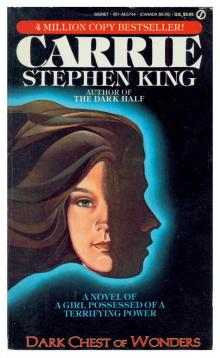 Carrie
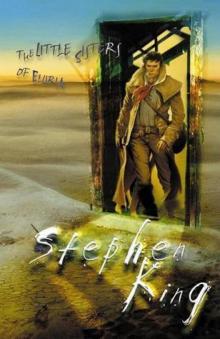 The Little Sisters of Eluria
 The Waste Lands
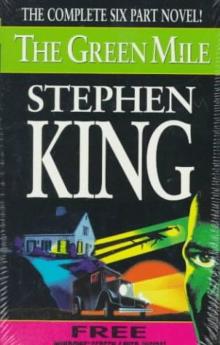 The Green Mile
 The Girl Who Loved Tom Gordon
 Cujo
Cujo The Outsider_A Novel
 The Tommyknockers
 Cell
Cell Pet Sematary
 The Talisman
 Four Past Midnight
 Different Seasons
 Needful Things
 Nightmares and Dreamscapes
 Christine
 The Running Man
 The Eyes of the Dragon
 11/22/63
 Firestarter
 Insomnia
 Finders Keepers
 Gerald's Game
 The Wind Through the Keyhole
 Hearts in Atlantis
 Danse Macabre
 Thinner
 Duma Key
 The Bachman Books
 Skeleton Crew
 The Outsider-Stephen King
 Full Dark, No Stars
 Salem's Lot
 Bag of Bones
 Desperation
 End of Watch
 Wolves of the Calla
 Mr. Mercedes
 Billy Summers
 Rose Madder
 Later
Later Gunslinger
 The Langoliers
 Joyland
 If It Bleeds
 Apt Pupil (Scribner Edition)
 Flight or Fright
 Everything's Eventual: 14 Dark Tales
 Night Shift
 The Dark Half
 On Writing
 The Institute
 A Death
 The Man in the Black Suit : 4 Dark Tales
 Bullet
 The Dark Tower tdt-7
 Chiral Mad 3
 Big Driver
 Stephen King: The Green Mile
 Dolan's Cadillac nad-1
 Head Down nad-22
 The Doctor's Case
 Luckey Quarter
 Rage (richard bachman)
 Black House js-2
 The Wind Through the Keyhole (Dark Tower)
 Duma Key: A Novel
 Dark Tower V, The
 Cycle of the Werewolf
 AUTOPSY ROOM FOUR
 Dark Tower VII, The (v. 7)
 Gramma
 Suffer the Little Children
 Chinga
 Word Processor of the Gods
 Lisey’sStory
 Dark Tower V (Prologue)
 The Stand (Original Edition)
 Rainy Season nad-13
 Transgressions
 The Plant
 Under the Dome: A Novel
 The Dark Tower II: The Drawing of the Three
 The End of the Whole Mess:
 Ur
Ur The Body
 Uncollected Stories 2003
 Chattery Teeth
 The Mouse on the Mile
 The Cat from Hell
![The Drawing of the Three [The Dark Tower II] Read online](http://i1.bookreadfree.com/i/03/25/the_drawing_of_the_three_the_dark_tower_ii_preview.jpg) The Drawing of the Three [The Dark Tower II]
The Drawing of the Three [The Dark Tower II] Cell: A Novel
 Uncle Otto's Truck
 Song of Susannah dt-6
 The Dark Tower VII
 Head Down
 Sneakers
 Crouch End
 Outsider
 End of Watch: A Novel (The Bill Hodges Trilogy Book 3)
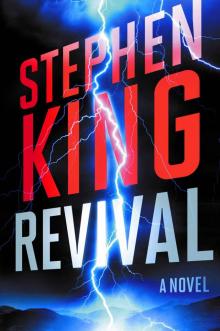 Revival: A Novel
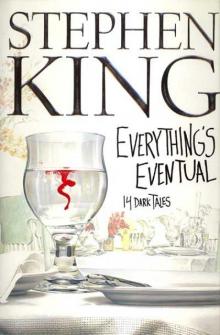 Everything's Eventual skssc-4
 The Colorado Kid
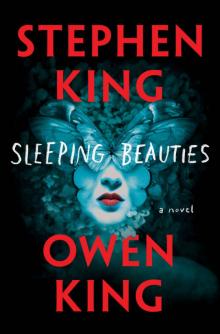 Sleeping Beauties: A Novel
 The Dark Tower IV Wizard and Glass
 A Book of Horrors
 Four Past Midnight - 3 - Secret Window, Secret Garden
 The House on Maple Street
 Sometimes They Come Back
 Blockade Billy
 Crouch End nad-17
 Lunch at the Gotham Cafe
 The Waste Lands dt-3
 Six Stories
 A Face in the Crowd
 Case
Case Four Past Midnight - 2 - The Langoliers
 Umney's last case nad-21
 Survivor Type
 Guns (Kindle Single)
 You Know They Got a Hell of a Band
 The Jaunt
 In A Half World Of Terror
 Gwendy's Button Box
 Storm of the Century
 The Jaunt. Travel
 Roadwork
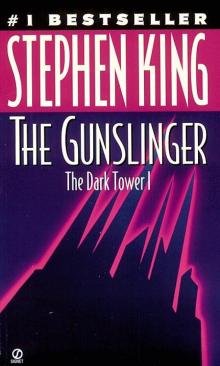 Darktower 1 - The Gunslinger
 Faithful
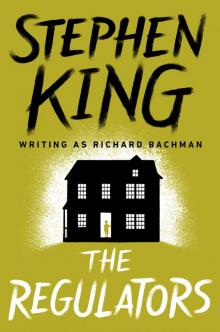 The Regulators
 A Bedroom in the Wee Hours of the Morning
 Graveyard Shift
 The Monkey
 Children of the Corn
 The Reploids
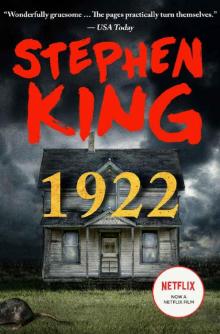 1922
1922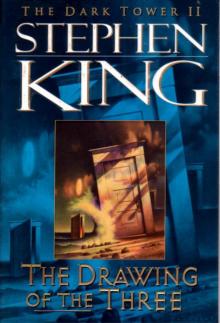 Darktower 2 - The Drawing of the Three
 Wizard and Glass dt-4
 Riding The Bullet
 Wolves of the Calla dt-5
 L.T.'S Theory Of Pets
 The Langoliers fpm-1
 The Two Dead Girls
 The Blue Air Compressor
 Everything's Eventual
 You, Human: An Anthology of Dark Science Fiction
 The Night of The Tiger
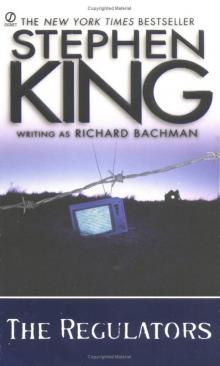 The Regulators (richard bachman)
 Elevation
 The Road Virus Heads North
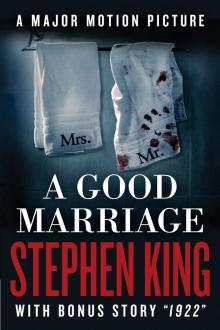 Good Marriage
 Four Past Midnight - 5 - The Library Policeman
 Grey Matter
 Herman Wouk Is Still Alive
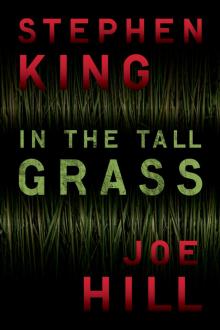 In the Tall Grass
 Six Scary Stories
 Foreward
 The Crate
 The wind through the keyhole adt-8
 King, Stephen - Battleground
 The Wedding Gig
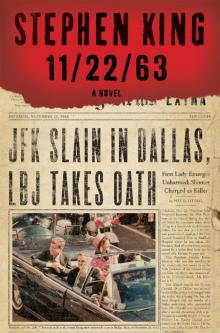 11/22/63: A Novel
 The Long Walk